Quick Market Summary
- What happened: An ADAS calibration workshop in Israel — running VDI-3, CARDAQ-3, AUTEL VCIM and TOPDON MCVI — was completely locked out of 2025 Chery, JETOUR and Omoda vehicles. Every diagnostic tool they owned failed.
- Why: 2025 Chinese vehicles introduced SGW (Security Gateway) modules that require manufacturer-specific authentication. Third-party tools — regardless of protocol support — cannot pass this gate.
- What we did: We told them SmartLink couldn't solve their core problem (ADAS calibration requires on-road testing with an OEM tool). We recommended a two-tier strategy instead: Chery OEM diagnostic platform for daily high-frequency work + SmartLink C for low-frequency multi-brand support.
- What they lost: During the decision process, a MAXUS eTERRON 9 EV from Israel's largest insurance fleet arrived for emergency service. A SmartLink version compatibility gap meant we couldn't connect in time. The workshop lost the client.
- Where it stands: The OEM diagnostic tool + SmartLink C order has been invoiced. The workshop decided to move forward with the proposed diagnostic strategy.
⚡ The core insight of this case: The solution was not selling more equipment. It was saying no when SmartLink was the wrong tool, explaining why ADAS calibration has a hard physical constraint no remote solution can bypass, and helping the workshop build a diagnostic strategy that matched tools to tasks. That honesty is what moved a ¥37,530 purchase forward — not a sales pitch.
🕑 Case Timeline
Initial Enquiry
ADAS workshop discovers SGW lockout on 2025 Chery. All four diagnostic tools fail.
Technical Evaluation
NEV Fix confirms SmartLink cannot solve ADAS calibration. Two-tier strategy proposed.
MAXUS Emergency
MAXUS eTERRON 9 arrives. Local SmartLink incompatible. Insurance-fleet client lost.
Procurement Plan
OEM diagnostic platform + SmartLink C invoiced. Workshop commits to two-tier strategy.
1. The Email That Started Everything
In May 2026, we received an email from an ADAS calibration specialist at an independent repair workshop in Israel. His team had just encountered the new SGW security gateway on a 2025 Chery vehicle. Their professional multi-brand diagnostic fleet — including VDI-3, CARDAQ-3, AUTEL VCIM and TOPDON MCVI — was completely locked out.
The workshop's toolkit was not entry-level. They ran:
- VDI-3 / VNCI — multi-brand J2534 pass-thru interface
- CARDAQ-3 — SAE J2534-1 device for OEM software compatibility
- AUTEL VCIM — advanced vehicle communication interface module
- TOPDON MCVI — multi-brand diagnostic and programming interface
All four devices supported DoIP (Diagnostics over Internet Protocol). All four were considered professional-grade. And all four failed to establish communication with 2025 Chery, JETOUR and Omoda vehicles.
The workshop's core business was ADAS radar calibration — recalibrating front radar, cameras, and lidar sensors after collision repair. They served one of Israel's largest rental fleets and one of the country's biggest automotive service networks. A single 2025 Chery on their lift, with every diagnostic tool showing "no communication," was not just a technical problem. It was a business threat.
💡 For context: ADAS calibration is not coding or module replacement. After a radar or camera is repaired or replaced, the sensor must be re-aligned to the vehicle's coordinate system. This requires connecting the OEM diagnostic software, mounting physical calibration targets at precise distances, and driving the vehicle on real roads at specific speeds while the software verifies alignment data in real time. The vehicle must be running. The connection must be continuous. The software must be the manufacturer's own calibration application.
The workshop's question was direct: could our SmartLink C remote diagnostic system bypass the SGW lock and let them use their own equipment for ADAS calibration?
Our answer surprised them.
2. Why We Said No to Selling SmartLink for ADAS Calibration
Most equipment vendors, when asked "can your tool do X," default to "yes" — or at least "we can make it work." We said no. Here's why.
ADAS calibration has a hard physical constraint. The process is not stationery. Radar sensors need to measure reflections from real-world objects at specific distances. Camera recalibration requires the vehicle to drive at a steady speed while the system re-learns lane markings, horizon lines and object trajectories. This means:
- The diagnostic platform must be physically connected to the vehicle throughout the drive
- The OEM calibration software must be running locally on that platform
- The connection must be uninterrupted for 15–45 minutes of active driving
A remote session via SmartLink C would connect the workshop's vehicle to our engineers in Guangzhou, who would then operate the OEM software on their end. But during a road test, a remote connection faces two unavoidable risks: cellular signal drops and latency spikes. A 2-second disconnect during a radar alignment measurement doesn't just interrupt the test — it invalidates the entire calibration sequence, forcing a restart from the beginning.
More fundamentally: even if SmartLink unlocked the SGW gate, the workshop's third-party diagnostic tools still wouldn't be running Chery's OEM calibration application. SGW is the gatekeeper. The calibration software is a separate requirement. Opening the gate doesn't give you the software on the other side.
✅ What SmartLink C CAN do (stationary vehicle operations):
- Fault code reading and clearing across all modules
- Key programming and immobilizer functions
- Post-accident module unlocking and communication restoration
- ADB (adaptive driving beam) activation and coding
- Infotainment system localization and language changes
- SGW security gateway bypass for diagnostic access
The workshop appreciated the honesty. As one of their team members put it:
"It's a sensible and practical call."
Instead of selling SmartLink for the wrong use case, we proposed a two-tier strategy:
- Tier 1 — Chery OEM diagnostic platform: For daily high-frequency work. ADAS calibration, module programming, and any operation requiring continuous, real-time vehicle communication. Local, independent, no network dependency.
- Tier 2 — SmartLink C: For lower-frequency needs on other Chinese brands. When a BYD, GAC or SAIC vehicle arrives with a problem the workshop doesn't see every week, SmartLink connects them to our engineers in Guangzhou who have the China OEM software for that brand.
They accepted this approach. We began the procurement process for the Chery OEM diagnostic tool — a device that is not sold through open retail channels and requires internal manufacturer sourcing (more on this later).
3. The MAXUS Crisis: When Timing and Compatibility Collide
Two weeks into the procurement discussion, the workshop sent an urgent message. A MAXUS eTERRON 9 EV — a fully electric pickup truck from SAIC's MAXUS brand — had arrived at their facility. This vehicle belonged to a client of one of Israel's largest insurance companies.
The workshop's full diagnostic fleet failed on the MAXUS as well. Different brand, same SGW problem.
⚠️ The stakes, in the workshop's own words:
"If we fail tomorrow morning, we could lose this client forever. In Israel, sometimes there is no second opportunity."
The workshop proposed an emergency solution: purchase a SmartLink C locally in Israel, have it ready by the next morning, and run a remote diagnostic session to access the MAXUS.
There was one problem we discovered immediately: version incompatibility.
The SmartLink C sold in international markets generates a 6-digit pairing code for connection. Our receiving platform in China — SmartLink B — only accepts 8-digit pairing codes from the Chinese-region hardware. The locally purchased unit could not connect to our support platform.
This is not a hardware limitation. It is the result of different regional deployment architectures designed for different support ecosystems: Chinese-market hardware connects to Chinese support infrastructure. International-market hardware connects to internationally provisioned support endpoints. When a workshop needs access to China-based engineers running China-region OEM software, only China-region hardware works.
But the workshop didn't have China-region SmartLink hardware. And the MAXUS was on their lift, with a deadline the next morning.
Result: the workshop lost the insurance-fleet client.
This was not a failure of technology. It was a failure of preparation — the kind of hard lesson that every overseas workshop servicing Chinese vehicles will encounter at some point. The right equipment, sourced through the right channel, arrived too late for this specific emergency.
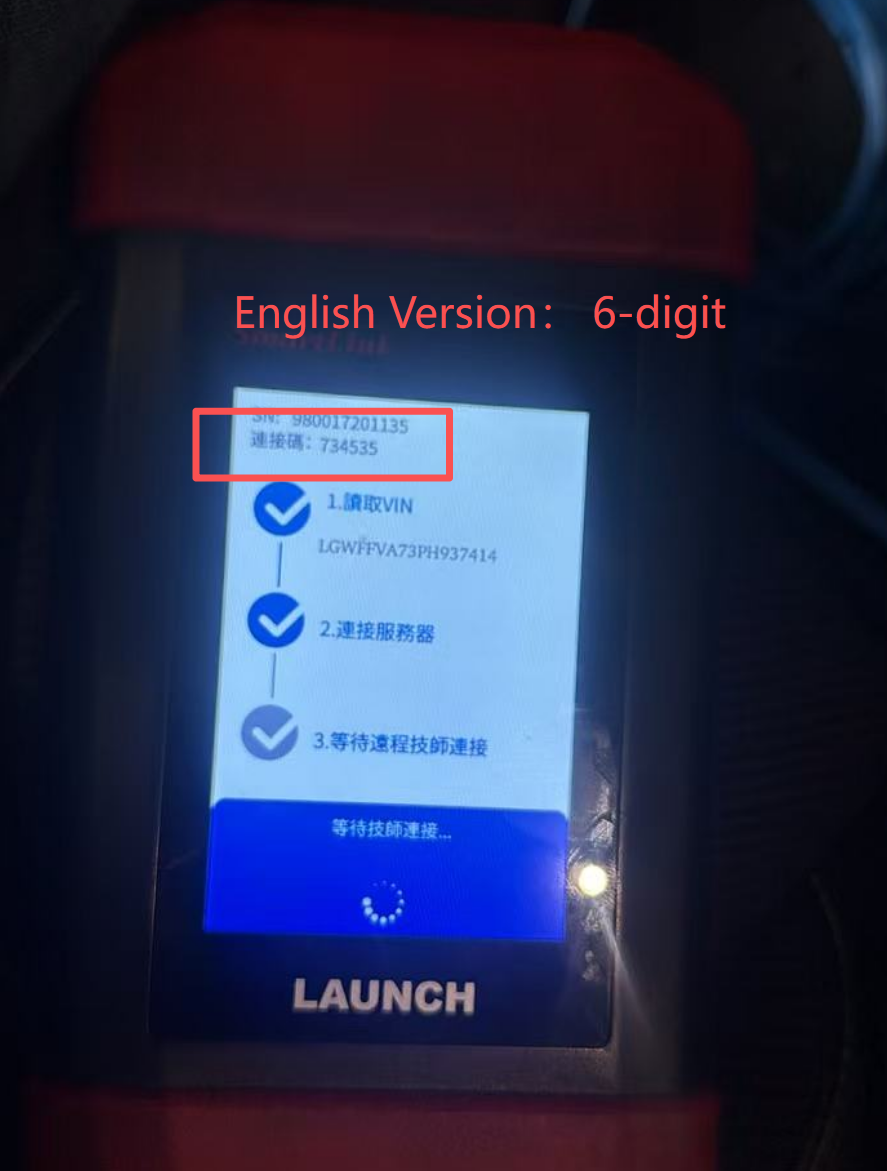
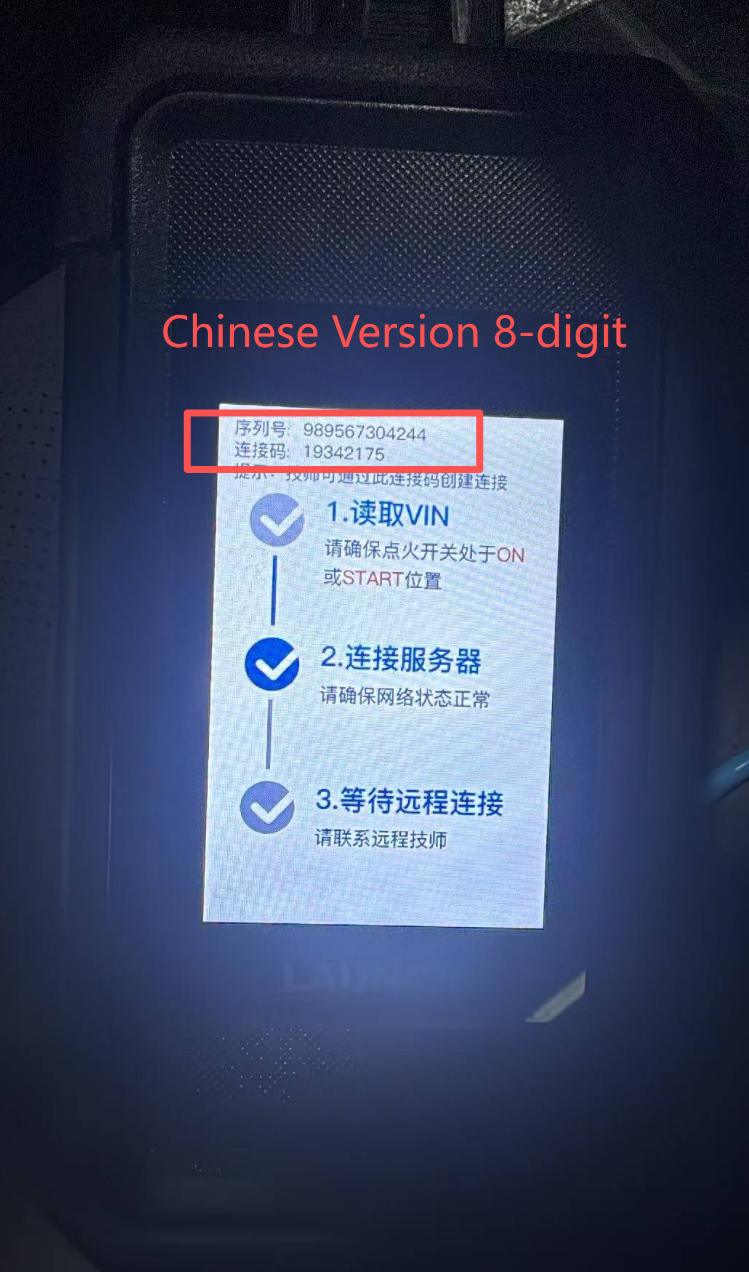
💡 The lesson for every overseas workshop: If your business depends on servicing Chinese-brand vehicles, do not wait for the emergency to source your diagnostic infrastructure. The compatibility gap between international-market and China-market hardware is real — as shown above, even the pairing code format differs. When the insurance company's vehicle is on your lift, a 2-week equipment lead time is not a solution — it is the reason you lost the account.
4. The Right Combination: How a Two-Tier Strategy Solves the Real Problem
After the MAXUS crisis, the workshop moved quickly to finalize their diagnostic strategy. The final solution was a two-tier combination:
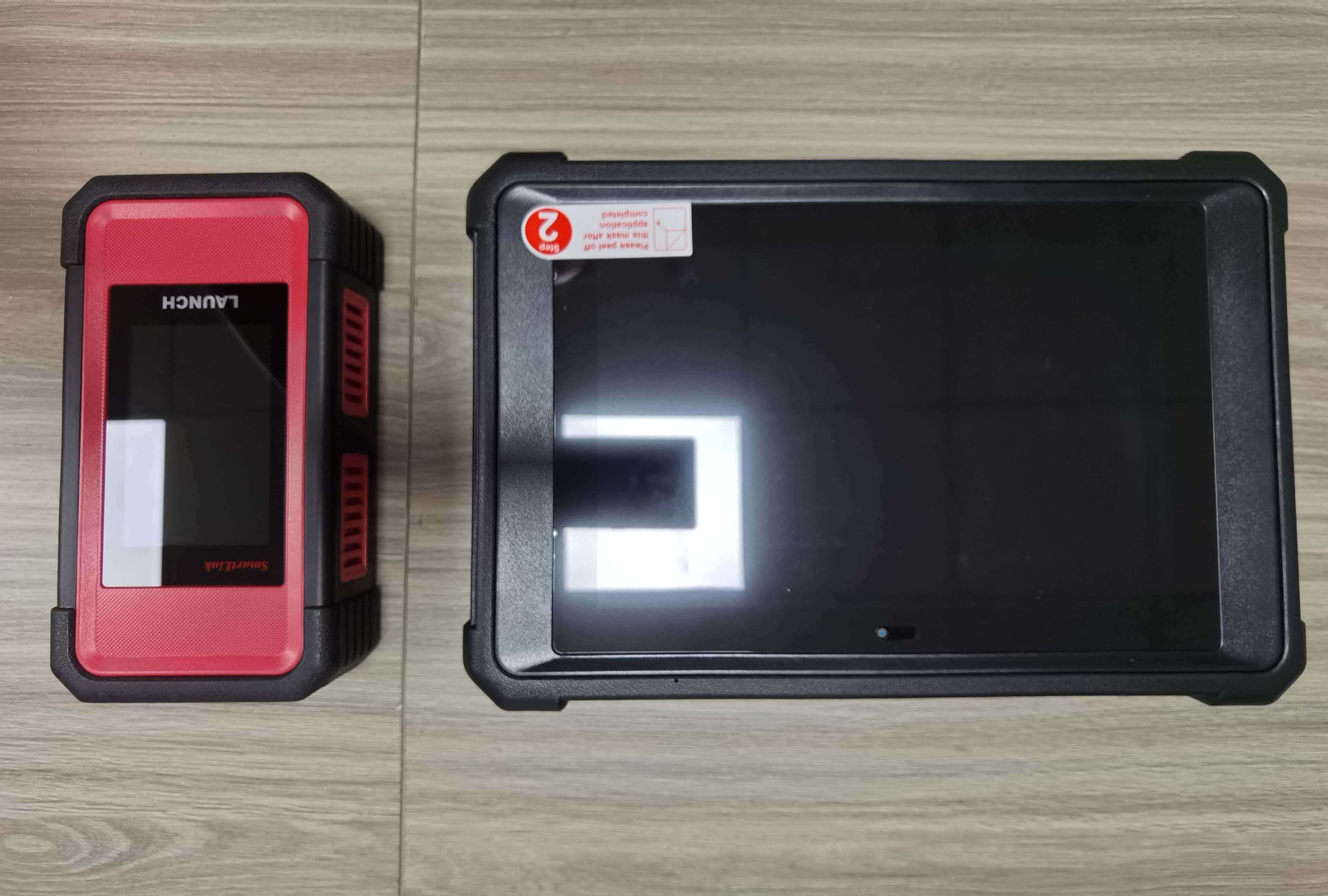
✅ Tier 1: Chery OEM Diagnostic Platform
For: Chery, JETOUR and Omoda — the workshop's highest-volume brands.
Use cases: ADAS radar and camera calibration, module programming, key matching, SGW authentication for all diagnostic access.
Why this tool: Only the OEM platform carries the manufacturer's security certificates needed to pass SGW authentication. Only the OEM platform runs the calibration software required for ADAS alignment. No third-party alternative exists for these tasks.
Deployment: Local, independent, no network dependency. The workshop owns the tool and operates it on their own schedule.
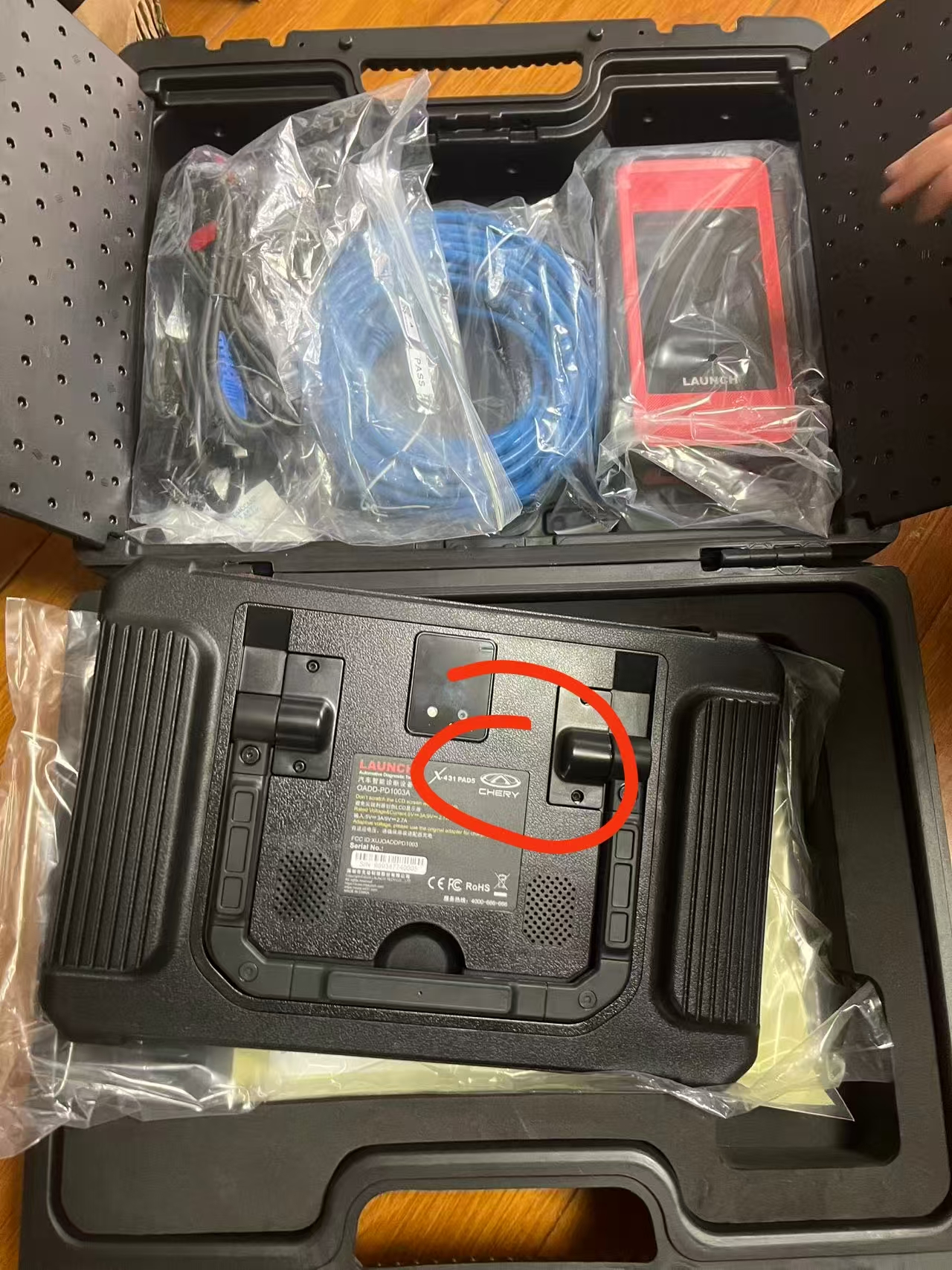
✅ Tier 2: SmartLink C Remote Support
For: BYD, GAC, SAIC, NIO, Xpeng, Li Auto and 15+ other Chinese brands — lower-frequency vehicles.
Use cases: Fault diagnosis, immobilizer and key functions, post-accident module recovery, ADB activation, system localization, SGW unlock for supported brands.
Why this tool: Buying an OEM diagnostic platform for every Chinese brand a workshop might encounter is economically impractical. SmartLink provides on-demand access to China-based engineers who already have the OEM software for any brand.
Deployment: Requires stable internet. Connect the SmartLink C to the vehicle, our engineers in Guangzhou operate the OEM software remotely. Best for stationary operations.
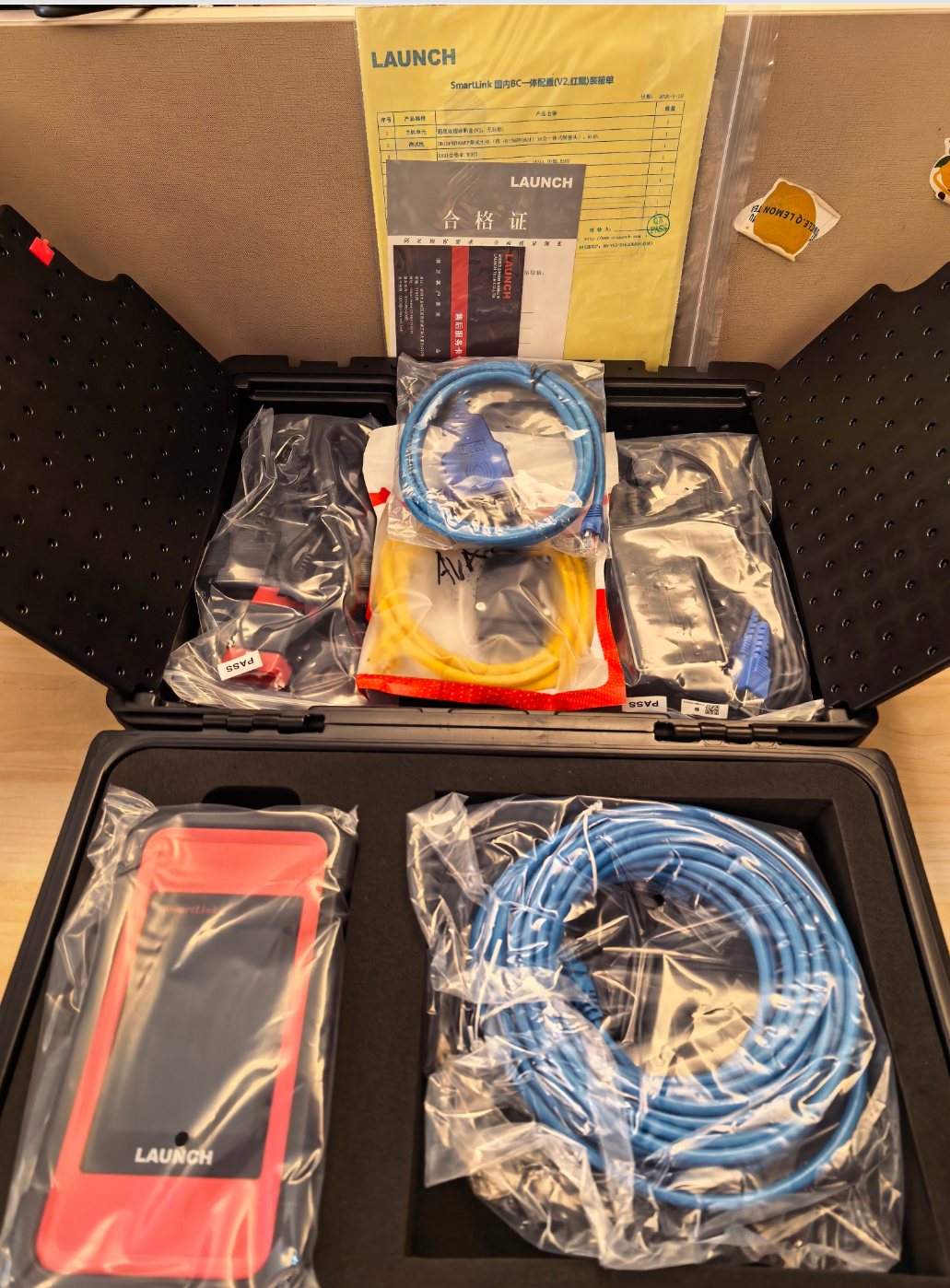
The total investment for this combination was ¥37,530, including:
- Chery OEM diagnostic platform (Overseas Version, supports Chery / Omoda / Jaecoo) — ¥30,000
- SmartLink C (Chinese Version) — ¥2,200
- ENET cable — ¥80
- AVATR cable — ¥250
- Remote Vehicle Diagnostic Gateway Software (1-year license) — ¥5,000
The invoice was issued in mid-June 2026. The workshop decided to move forward with this strategy.
5. The Hard Truth About OEM Diagnostic Tools for Chinese Vehicles
Throughout this case, one question came up repeatedly: why can't the workshop just buy the OEM diagnostic tool directly from Chery?
The answer reveals a structural barrier that most overseas workshops don't discover until they're already stuck.
OEM diagnostic platforms for Chinese brands — Chery, JETOUR, Omoda, BYD, GAC, and others — are not consumer products. They are professional service equipment distributed through each manufacturer's internal dealer network and authorized service center system. There is no public e-commerce listing, no international distributor, and no direct purchase path for an independent workshop outside China.
Overseas workshops without established supply relationships face long lead times and severely limited purchasing channels. The tools exist. They are manufactured. But they flow through a closed-loop system designed for the domestic Chinese service network.
This is where being based in Guangzhou — the export hub for Chinese automotive parts and equipment — becomes a practical advantage. Through established manufacturer relationships, we can source these platforms for overseas workshops. It is not instant. It is not cheap. But it is possible, and for workshops whose business depends on servicing Chinese vehicles, it is increasingly necessary.
6. Diagnostic Tool Decision Matrix: Matching Tools to Tasks
After working through this case, we developed a decision framework that any overseas workshop can use to evaluate their diagnostic tooling needs. The key insight: no single tool solves everything. The right strategy matches the tool to the specific task.
| Task Type | Best Tool | Second Option | Does NOT Work | Key Constraint | Daily Workshop Use? |
|---|---|---|---|---|---|
| ADAS Calibration Radar, camera, lidar alignment |
✅ OEM diagnostic platform | — | ❌ Any remote tool ❌ Any third-party scanner |
Requires on-road driving with OEM calibration software running locally | ✅ Yes — daily, with OEM platform |
| SGW Authentication Bypassing security gateway |
✅ OEM diagnostic platform | ✅ SmartLink C | ❌ Third-party scanners (AUTEL, TOPDON, etc.) | Requires manufacturer security certificate | ⚠️ Only when needed — authentication is occasional, not daily |
| Module Programming ECU flashing, coding |
✅ OEM diagnostic platform | ⚠️ SmartLink (stationary only, stable connection required) | ❌ Third-party scanners for 2025+ vehicles | Requires OEM flash files and stable connection | ✅ Yes — with OEM platform |
| Fault Diagnosis DTC reading, live data |
✅ SmartLink C | ✅ OEM diagnostic platform | ❌ Third-party scanners for 2025+ vehicles with SGW | SmartLink is faster for multi-brand; OEM is needed if SGW active | ✅ Yes — high-frequency daily task |
| Key Programming Key matching, immobilizer |
✅ OEM diagnostic platform | ✅ SmartLink C | ❌ Generic key programmers on SGW vehicles | Stationary operation; both tools work if SGW is the only barrier | ⚠️ Occasional — as-needed basis |
| System Localization Language change, region coding |
✅ SmartLink C | ✅ OEM diagnostic platform | ❌ Third-party scanners | Stationary; SmartLink provides engineer expertise for complex coding | ⚠️ Rare — once per vehicle purchase |
Last updated: June 2026. Based on real workshop experience with 2025 Chery, JETOUR, Omoda, BYD, GAC and SAIC vehicles.
7. What Every Workshop Should Know Before Their First 2025 Chinese Vehicle Arrives
This case produced several hard-won lessons. None of them are theoretical. Each one came from a real decision point where the wrong answer cost time, money or a client relationship.
📚 Lesson 1: SGW is an authorization problem, not a compatibility problem.
Your diagnostic tool's protocol support — DoIP, CAN FD, UDS — is irrelevant if it lacks the manufacturer's SGW authentication certificate. The gateway does not negotiate. It authenticates or it blocks. No third-party scanner, regardless of price or capability, carries these certificates for 2025+ Chinese vehicles. The only tools that pass SGW are (a) the brand's OEM scan tool, or (b) a remote diagnostic support bridge that tunnels to someone who has one.
📚 Lesson 2: Remote support cannot replace OEM tools for dynamic operations.
Any diagnostic task that requires the vehicle to be driven — ADAS calibration, dynamic road tests, transmission adaptation — cannot be reliably performed through a remote session. The latency, connection stability and software-license locality constraints are fundamentally incompatible with real-time, on-road diagnostic workflows. Remote tools are excellent for stationary work. They are the wrong tool for dynamic work.
📚 Lesson 3: Source China-market hardware for China-support access.
International-market SmartLink hardware is provisioned for international support infrastructure. If your workshop needs access to China-based engineers running China-region OEM software (which is the primary value of a remote diagnostic service for Chinese vehicles), you need China-region hardware. Buying locally may seem faster, but the compatibility gap can render the device unusable for the very purpose you bought it.
📚 Lesson 4: Build your diagnostic infrastructure before the emergency.
The MAXUS crisis would have been avoidable if the workshop had already completed the SmartLink C procurement through the correct channel. OEM diagnostic tools have 10–15 day lead times. SmartLink procurement takes 1–2 weeks. None of this can be compressed when an insurance company's vehicle is already on your lift. The time to build your Chinese vehicle diagnostic capability is before the first 2025 Chery rolls in — not the night before.
💡 The bigger picture: Chinese vehicle diagnostics is no longer about buying a better scanner. It is about building the right diagnostic ecosystem. The OEM tool + remote support + internal workflow — three layers that work together. No single device replaces this logic. The workshops that understand this now will lead the market in 3 years.
Frequently Asked Questions
What is the SGW security gateway on 2025 Chinese vehicles?
SGW (Security Gateway) is an authentication module on 2025+ Chery, JETOUR, Omoda and other Chinese-brand vehicles that sits between the OBD-II port and the vehicle's internal CAN networks. Any external diagnostic tool must pass SGW authentication before it can communicate with vehicle modules. Third-party tools — even high-end devices supporting DoIP — lack the manufacturer-specific authentication keys and are rejected. This is an authorization problem, not an encryption problem.
Can third-party diagnostic scanners bypass the SGW security gateway?
No. Third-party diagnostic tools, regardless of protocol support (DoIP, KWP2000, UDS), cannot bypass SGW authentication. The gateway requires manufacturer-specific security certificates that only OEM diagnostic platforms possess. Even premium tools like AUTEL, TOPDON, VCDS, and CARDAQ-3 are blocked. The only workable approaches are: (1) use the brand's OEM diagnostic tool, or (2) connect a remote support device (like SmartLink C) that bridges to an OEM platform in China.
Can SmartLink C perform ADAS radar calibration on Chinese vehicles?
No. ADAS radar calibration requires the vehicle to be driven on real roads at specific speeds with OEM calibration software connected in real time. A remote diagnostic session via SmartLink cannot maintain a stable connection throughout a dynamic road test, and the OEM calibration software must be running on a locally connected diagnostic platform. For ADAS calibration specifically, the OEM diagnostic tool is the only viable option. SmartLink is suitable for stationary diagnostic work: fault code reading, key programming, module coding, and SGW unlock.
How should overseas workshops build a diagnostic strategy for 2025 Chinese vehicles?
For workshops servicing multiple Chinese brands, a two-tier strategy is recommended: Tier 1 — invest in the OEM diagnostic platform for your highest-volume brand (for daily high-frequency work like ADAS calibration and module programming). Tier 2 — add a SmartLink C remote support device for lower-frequency needs on other brands, giving you access to China-based engineers with OEM software. This combination covers both speed-critical daily workflow and the long tail of occasional multi-brand diagnosis. The key insight: no single tool solves everything. The right strategy is matching the tool to the task.
Why are OEM diagnostic tools for Chinese vehicles difficult to purchase overseas?
OEM diagnostic platforms for brands like Chery, JETOUR and Omoda are not sold through open retail channels. They are distributed through authorized dealer networks and internal procurement systems within China. Overseas workshops without established supply relationships face long lead times and limited purchasing channels. Working with a Guangzhou-based partner who has direct manufacturer relationships is often the most practical path to obtaining these tools.
Can the SGW security gateway be removed or disabled permanently?
Technically, SGW is a firmware-level module integrated into the vehicle's gateway ECU. While "SGW delete" or "SGW bypass" services exist in some markets, they carry significant risks: (1) tampering with the gateway ECU can void the manufacturer warranty, (2) future OTA updates may restore or brick the gateway, and (3) some insurance policies in regulated markets will not cover a vehicle with modified security architecture. For most overseas independent workshops, the practical approach is not to remove SGW but to use OEM-authenticated tools that pass through it legitimately. This preserves warranty, insurance compliance, and resale value for the customer.
Will more Chinese vehicle brands adopt SGW in future models?
Yes. SGW is not a single-brand trend — it is an industry-wide direction driven by UN Regulation No. 155 (cybersecurity) and UN Regulation No. 156 (software updates), both of which China has adopted for export vehicles. Brands that have already deployed SGW on 2025+ models include Chery, JETOUR, Omoda, Geely, BYD (select models), and GAC. Brands expected to follow within 2026-2027 include SAIC Maxus, Changan, and NIO. For overseas workshops, this means the "SGW lockout" situation described in this case study will become increasingly common — not just for Chery but across the entire Chinese vehicle fleet exported to global markets. Building a diagnostic strategy now, before the wave arrives, is the difference between being ready and losing clients.
Is Your Workshop Ready for 2025+ Chinese Vehicles?
If your workshop is beginning to service 2025+ Chinese vehicles, we can help you decide whether you actually need an OEM diagnostic platform, SmartLink, both — or neither. Every workshop's situation is different: the brands you see, the work you do, the tools you already own.
Sometimes the best advice is telling you not to buy.