Quick Answer: What Does It Take to Build an EV Repair Workshop?
Building a Chinese EV repair workshop overseas requires three foundations: (1) safety capability — high-voltage tools, insulation testing, and certified PPE protocols; (2) diagnostic capability — a multi-brand scanner that covers BYD, Chery, Geely, and other Chinese EV platforms; (3) access to technical expertise — through structured training programs and ongoing remote diagnostic support. Direct China sourcing can reduce equipment costs compared to buying through regional resellers, but equipment selection matters more than equipment pricing — choosing the right diagnostic tablet, integrating battery tools into a single workflow, and knowing which capabilities to defer can cut Phase 1 investment by 30-50% without compromising service quality. This case study — based on a real 2026 inquiry from a Bolivian workshop owner — shows how to think about equipment prioritization, not just equipment pricing.
In July 2026, a workshop owner in Bolivia contacted NEV Fix with a document that was refreshingly clear about what he wanted. He wasn't asking for a price list. He was asking for a turnkey solution — everything he needed to open a professional EV repair workshop, from diagnostic equipment and battery repair tools to safety gear and technician training, operational from day one.
Before reaching us, he had already received a formal quotation from a regional equipment reseller. When he noticed that every item on that quote was marked "Made in China," he decided to go directly to the source — not just to compare prices, but to find a partner who actually understood the equipment and could help him make the right choices.
This article walks through the real 11-category equipment requirements he shared, how we helped prioritize and optimize the list, and what a phased approach to EV workshop investment looks like in practice.
What the Customer Actually Asked For: 11 Categories, Zero Guesswork
The customer's requirement document was unusually thorough. It didn't say "send me a quote for EV equipment." It described a complete workshop operation across 11 categories — from workstations and lifts to battery repair zones to ADAS calibration to initial spare parts inventory.
Here is what a real, serious overseas EV workshop inquiry looks like:
Tier 1 — Non-Negotiable: Safety & Core Diagnostic Capability
Every EV workshop, regardless of size or budget, needs these before anything else. Without them, the workshop cannot legally or safely work on high-voltage vehicles.
1000V insulated tool sets, PPE suits, insulating mats, LOTO (Lockout/Tagout) system, emergency response equipment
Multi-brand scanner with EV software package, battery pack diagnosis module, programming capabilities
Insulation resistance tester (megohmmeter), high-voltage probe, oscilloscope with automotive-grade bandwidth
3 workstations: 2 for maintenance/diagnosis + 1 for alignment and tire service. Includes EV-rated lifts with proper insulation specification
Tier 2 — Core Revenue: Battery Repair & General Service
Once safety and diagnostics are in place, these tools enable the workshop's actual revenue-generating services — particularly battery repair, which is the highest-margin EV service category in most markets.
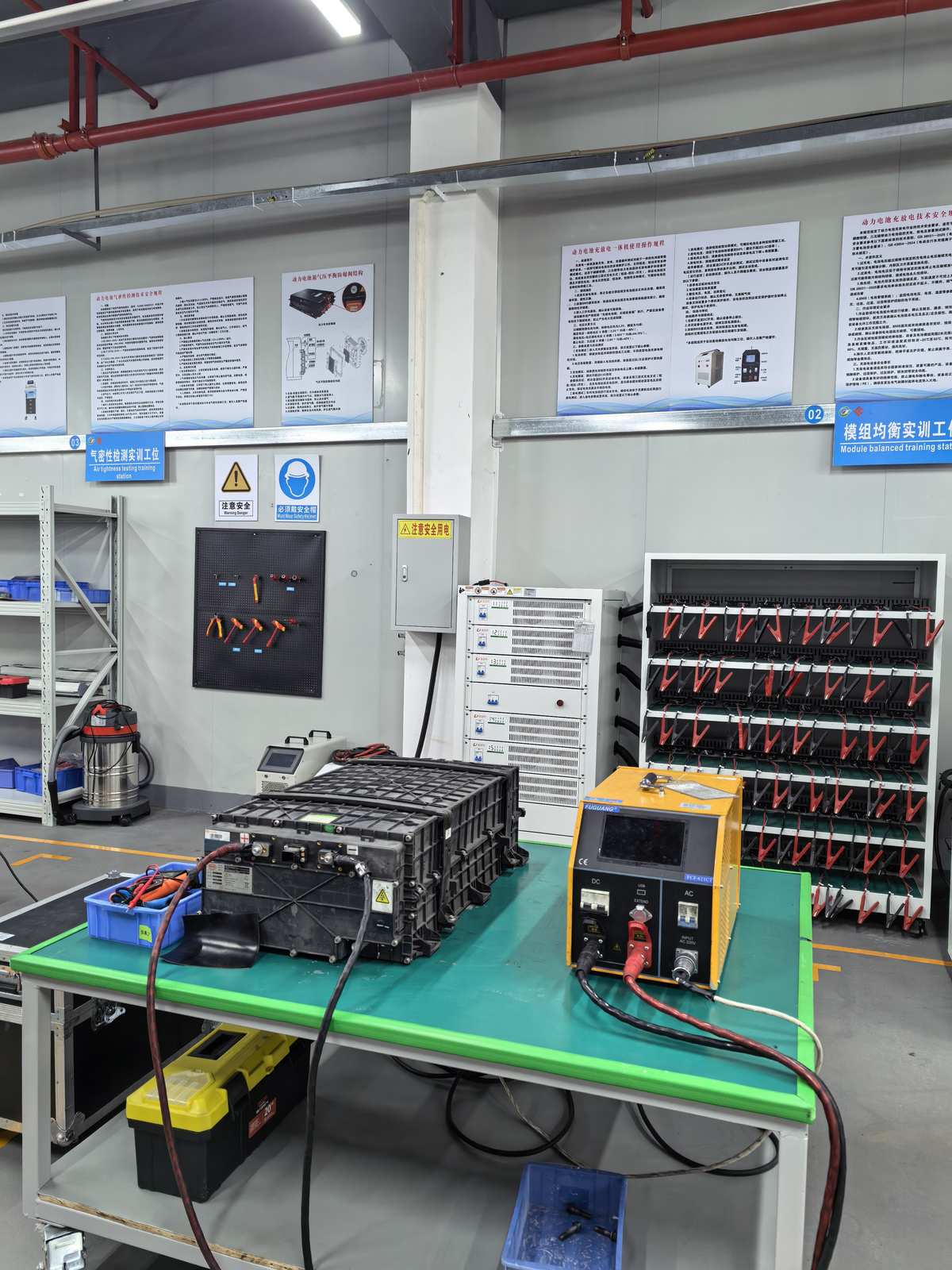
For diagnosing, balancing, and reconditioning individual cells and modules — the backbone of any battery repair service
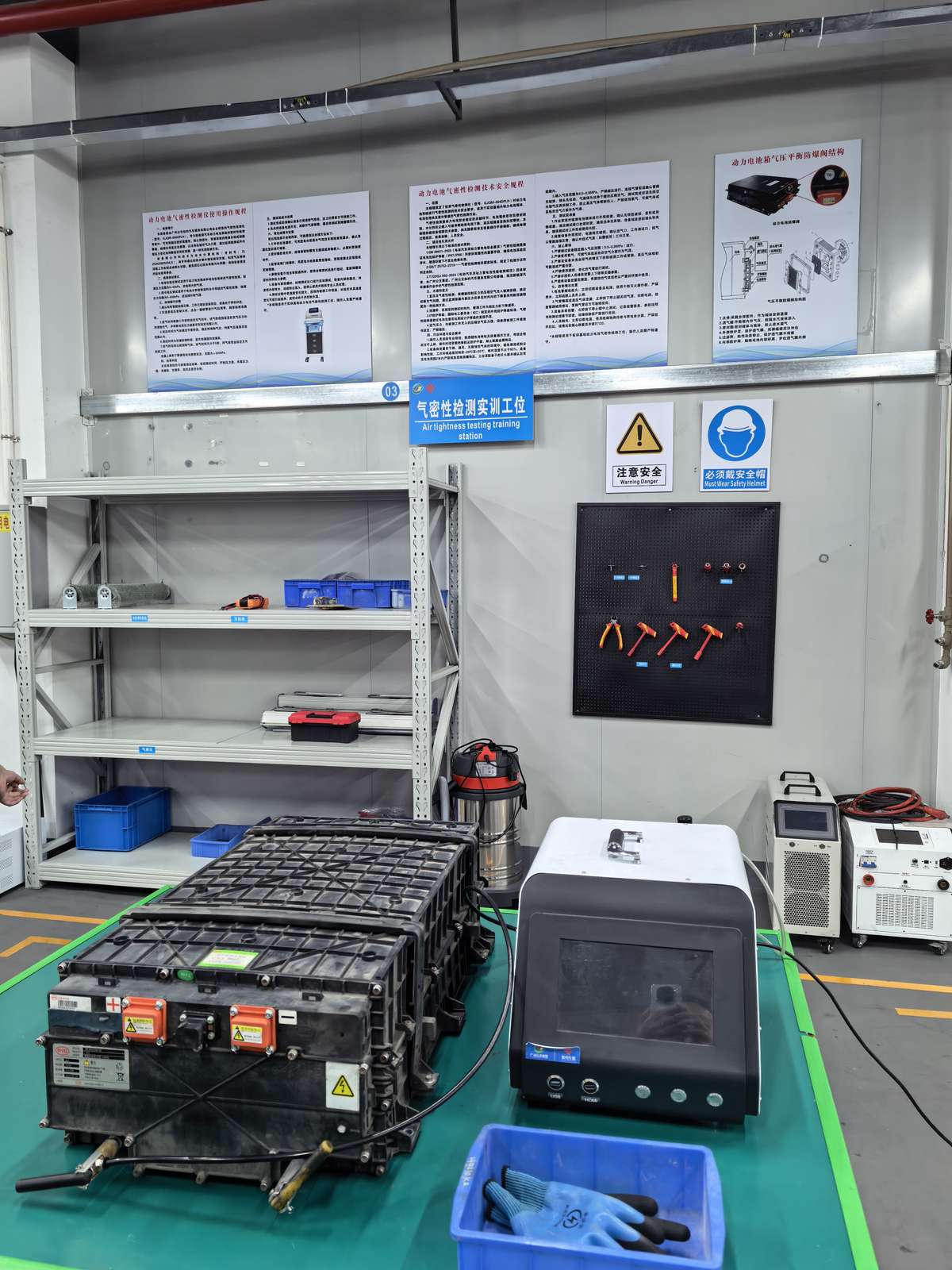
Integrated machine for controlled charging and discharging of complete battery packs and modules
Low-voltage airtightness testing for battery packs after opening and resealing
For A/C service and battery thermal management system maintenance
3D wheel alignment, tire changer (2 grades), tire balancer (2 grades)
84-piece insulated maintenance tool cart
Tier 3 — Competitive Differentiation: Add When Ready
These tools are valuable but not essential for opening day. They can be added as the workshop builds its customer base and identifies specific service demand.
Camera, radar, and LiDAR calibration equipment for modern EVs with advanced driver assistance systems
Equipment for testing AC/DC charge ports, onboard charger (OBC), and charging system functionality
For non-contact inspection of battery packs, electrical connections, and charging components
Tool carts, workbenches, engine crane, air compressor, jacks, stands, cleaning and storage systems
Basic kit of replacement parts, fluids, and consumable materials to begin operations immediately
This is a comprehensive list — and it's exactly what a serious EV workshop needs. But here is the crucial insight: not every item needs to be purchased on day one. The difference between a successful workshop launch and an overcapitalized startup often comes down to how these tools are prioritized.
Which brings us to the expert layer.
The Expert Layer: What NEV Fix Actually Does Beyond Sourcing
Anyone with an Alibaba account can look up LAUNCH equipment prices. The question is: does the overseas workshop owner know which equipment to buy, which to skip, and how to sequence the investment?
This is where most overseas workshop inquiries go wrong — and where the real value of working with a China-based EV repair specialist emerges.
When we reviewed the customer's 11-category requirement list, here is what we actually did — and these decisions illustrate the expert judgment that a simple equipment price list cannot provide:
Decision 1: Recommended PAD 5 Instead of PAD 9
The customer's requirement called for an X431 PAD 9 Link — LAUNCH's top-tier diagnostic tablet with advanced ADAS programming and oscilloscope integration. For a newly opening workshop in Bolivia, this was over-specification. The X431 PAD 5 covers all mainstream Chinese EV brands — BYD, Chery, Geely, GAC, and Great Wall — with the same core diagnostic protocols, battery pack diagnosis module, and live data streaming capability. The PAD 9 upgrade path remains open when the business grows into ADAS calibration, but on day one, the PAD 5 delivers 90% of the diagnostic value at roughly half the investment.
This is not about selling cheaper equipment. It's about knowing which features a start-up workshop will actually use in its first 12 months — versus which features require a customer base that hasn't been built yet.
Decision 2: Consolidated Battery Tools Into an Integrated Workflow
The customer had listed three separate units: a cell balancer (EVM324), a charge/discharge module (EVP711), and a battery pack tester. When used separately, these tools require the technician to move the battery pack between workstations and manually coordinate voltage readings across different devices. LAUNCH's EVB648 48-channel integrated system combines balancing, charging, and discharging into one workflow — the same technician at one workstation can diagnose, balance, and verify a battery module without disconnecting and reconnecting cables between steps. This reduces equipment cost and bench space, but more importantly, it reduces the risk of procedural errors that occur when data is manually transferred between separate tools.
For a workshop where battery repair will be the highest-margin service, getting the battery workflow right from day one matters more than having every individual tool in the catalog.
Decision 3: Deferred ADAS Calibration to Phase 2
The customer's list included ADAS calibration — camera, radar, and LiDAR alignment equipment. ADAS calibration is essential for a mature EV workshop, but it requires three things that a newly opening workshop does not yet have: dedicated floor space with precise leveling requirements, technicians trained on multi-brand ADAS procedures, and a steady flow of ADAS-equipped vehicles to justify the equipment cost. For a workshop launching in Bolivia, where the initial vehicle mix is more likely to include earlier-generation Chinese EVs with basic driver assistance or none at all, ADAS calibration is a Phase 2 investment — not a day-one purchase.
This was not about cutting the equipment list to save money. It was about sequencing the investment so that each phase's equipment generates the revenue to fund the next phase.
These three decisions — prioritizing the right diagnostic tier, integrating battery tools into a single workflow, and deferring advanced equipment until the market demands it — represent the expert layer that distinguishes a capability-driven workshop plan from a shopping list. They come from a team that repairs Chinese EVs every day and knows which tools get used and which gather dust.
The Economics: Understanding Equipment Sourcing Paths
When an overseas workshop needs EV equipment, there are essentially three ways to buy it. Each has different trade-offs — not just in price, but in technical support, logistics complexity, and long-term serviceability:
| Path | How It Works | Advantage | Limitation |
|---|---|---|---|
| Local Supplier | Buy from a distributor in your own country | Local warranty, immediate delivery, local-language support | Highest per-unit cost; limited EV-specific expertise in most markets |
| Regional Reseller | Buy from a company that imports Chinese equipment and resells it regionally | Easier logistics, single point of contact for multiple brands | Additional markup on every item; reseller may not have hands-on repair experience |
| China Direct + Technical Partner | Source from manufacturers with guidance from a China-based EV repair specialist | Factory pricing, expert equipment selection, integrated training + remote support | Requires technical partner who understands both the equipment and the repair workflow |
This Bolivia case illustrates the difference between Path 2 and Path 3.
Before contacting NEV Fix, this customer had received a formal quotation from a regional equipment reseller — a company that sources Chinese-made equipment, rebrands or resells it, and ships it to South American customers. The equipment on that quotation was predominantly LAUNCH brand, manufactured in China.
When we compared the reseller's quotation (originally in Bolivian currency) to what the same LAUNCH equipment costs when sourced directly from China, the difference was consistent across every product category:
| Equipment | LAUNCH Model | Regional Reseller (Approx. USD) | China Direct (USD) | Difference |
|---|---|---|---|---|
| Battery Cell Balancer (48-Channel) | EVB648 | ~$12,100 | $6,350 | -48% |
| Battery Pack Charge/Discharge Unit | EVP711 | ~$10,000 | $5,150 | -49% |
| EV Diagnostic Scanner | X431 PAD Series | ~$5,600 | $2,950 | -47% |
| Battery Leak Tester | EVT511 | ~$3,100 | $1,950 | -37% |
| Insulation Resistance Tester | ES200 | ~$960 | $660 | -31% |
| 3D Wheel Alignment Machine | LAUNCH | ~$13,300 | $4,000 | -70% |
| Refrigerant Recovery/Recharge Machine | LAUNCH | ~$5,900 | $1,770 | -70% |
Note: Reseller prices are approximate USD equivalents of the original Bolivian-currency quotation. NEV Fix prices are ex-factory China, excluding sea freight which typically adds 8-15% depending on destination. The customer also had the option of X431 PAD 5 (shown here) vs. PAD 9 (the higher-tier model on the original quote), and an integrated EVB648 system vs. separate balancer and charge/discharge units — equipment selection adjustments that further improve value beyond the raw price comparison.
Why the Price Difference Exists
Regional resellers typically add three layers of cost to Chinese-manufactured equipment: (1) their own procurement margin, (2) international freight and warehousing in their home country, and (3) local sales commission and after-sales markup. When the customer buys directly from China — with the equipment manufacturer shipping to the end user's nearest port — layers (1) and (2) are eliminated. The customer pays the ex-factory price plus sea freight to their own country. This is not a "discount" — it's the structural cost difference between a multi-tier distribution chain and sourcing from the manufacturing source.
The cost difference varies by equipment category, but across the LAUNCH items on this quotation, China-direct pricing was 30-70% lower than the regional reseller's price, depending on the item. The difference tends to be larger for conventional workshop equipment (lifts, alignment machines, tire equipment) and more moderate for specialized EV diagnostic tools — reflecting the different markups applied at each stage of the distribution chain.
But the cost difference, while real, is not the primary reason overseas workshops choose to work with NEV Fix. It's the combination of expert equipment selection, China factory pricing, and ongoing technical support — all from a team that repairs Chinese EVs every day and can tell you which diagnostic tablet you actually need and which battery tools integrate into a single workflow.
Beyond Equipment: Training, Installation & Ongoing Support
The customer's original requirement was clear: he didn't just want boxes of equipment delivered to his door. He wanted a fully operational workshop. This is where turnkey solutions differ from simple equipment sourcing:
Technical Training
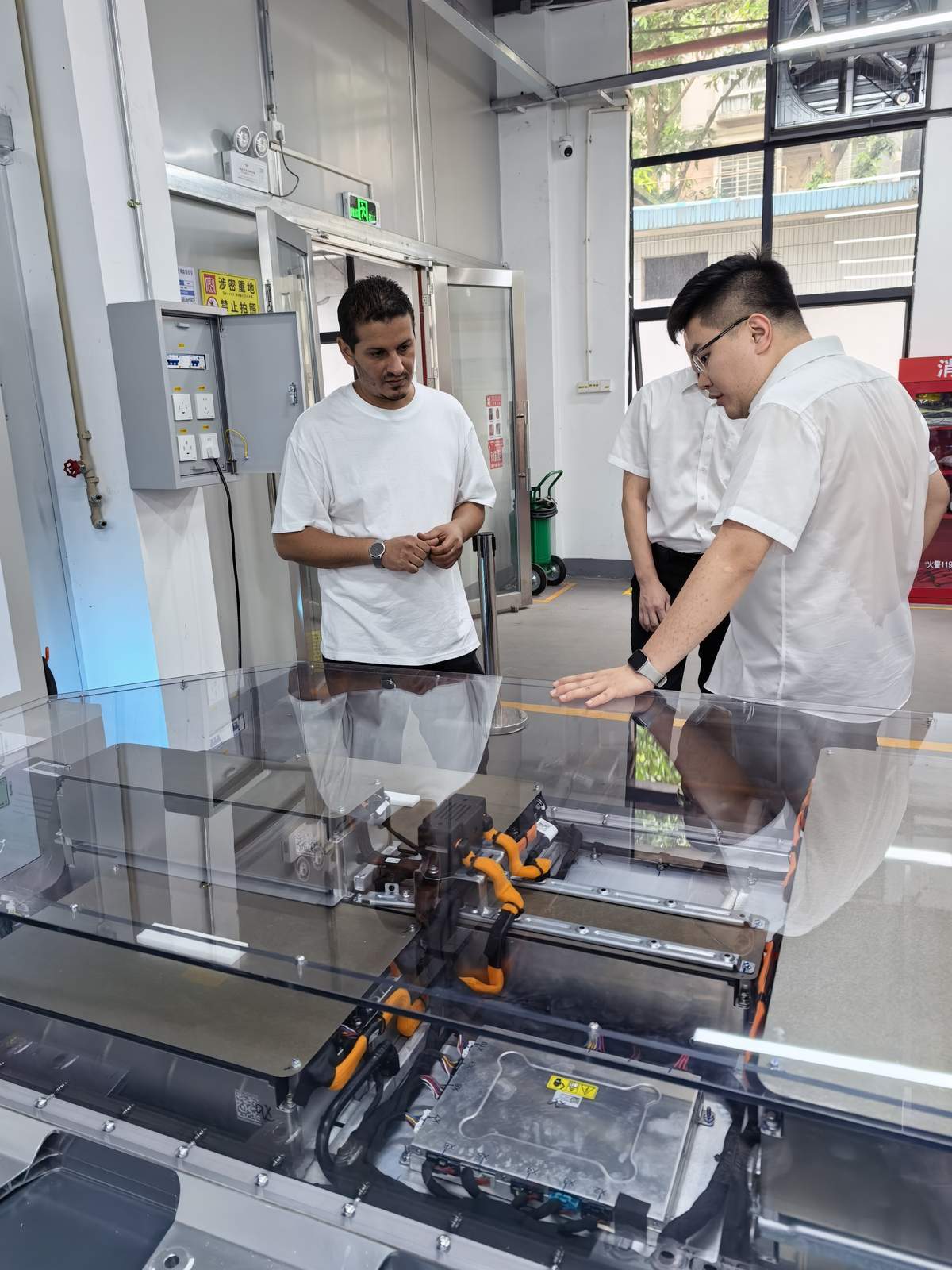
Equipment without trained technicians is wasted capital. NEV Fix's 7-day Complete EV Repair training program — conducted at our Guangzhou facility — covers everything from high-voltage safety protocols to battery disassembly, CAN network diagnostics, and hands-on use of the same LAUNCH diagnostic tools the workshop will use daily. For workshops that prefer on-site training, we can deploy instructors directly to the customer's facility.
Related: 3-Day Battery Repair Specialist | 3-Day A/C & Thermal Management
Installation & Commissioning
Heavy equipment — particularly lifts, alignment machines, and battery workstations — requires professional installation. NEV Fix coordinates with equipment manufacturers to arrange installation either by factory technicians (for major items) or through locally certified installers with remote guidance from Chinese engineers.
Remote Diagnostic Support
After the workshop is operational, NEV Fix's remote diagnostic service provides ongoing backup. When a technician encounters a BYD, Chery, or Geely vehicle with a problem they haven't seen before, they can connect via SmartLink C and our engineers in Guangzhou can read live data streams, interpret fault codes, and guide the repair — remotely, in real time.
A Practical Framework: How to Think About EV Workshop Investment
Based on this Bolivia case — and similar inquiries from workshop owners in Brazil, Nepal, and the Middle East — here is a framework for thinking about EV workshop investment in three phases:
Phase 1: Safety & Diagnostic Foundation
HV safety equipment, multi-brand EV scanner, insulation tester, lifts, basic tools. This gets you legally and safely operational.
~$8,000-12,000
Phase 2: Battery Repair Capability
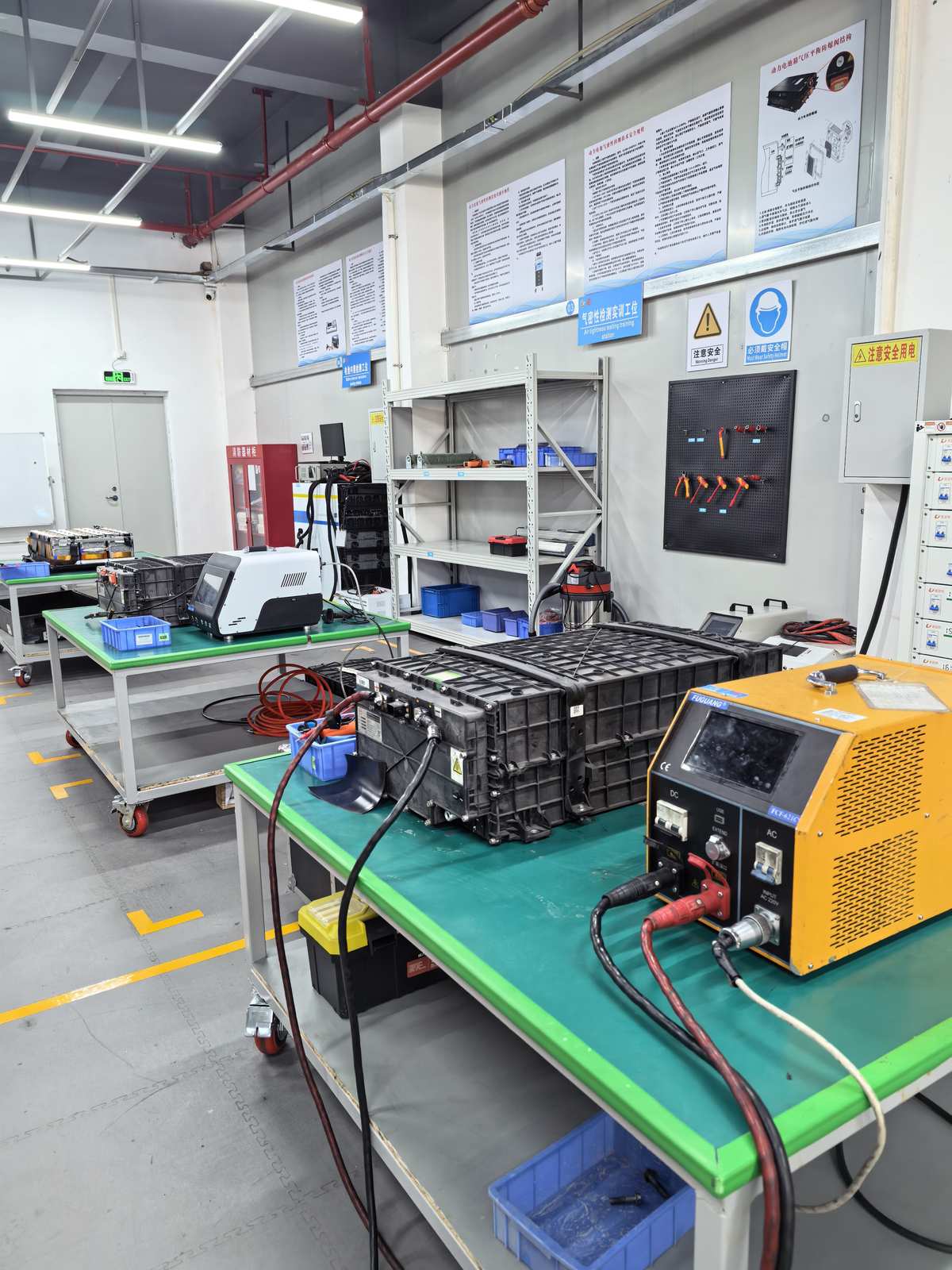
Cell balancer, charge/discharge unit, leak tester, refrigerant machine, specialized EV tool kit. This is where the revenue is.
~$15,000-25,000
Phase 3: Advanced Services
ADAS calibration, thermal camera, charging system tester, advanced programming tools. Add as your market demands.
~$15,000-30,000+
This phased approach has several advantages over buying everything at once:
- Lower initial capital requirement. A Phase 1 workshop can start generating revenue before Phase 2 equipment is purchased.
- Learning curve management. Technicians master safety and diagnostics before tackling complex battery repair.
- Market validation. You learn which Chinese EV brands are most common in your area before investing in brand-specific tools or ADAS calibration equipment for vehicles that may not be present in your market.
- Cash flow alignment. Each phase's equipment cost should be recoverable through 6-12 months of service revenue from that phase before committing to the next.
Key Principle: Equipment Should Follow Demand, Not the Other Way Around
The biggest mistake we see in overseas EV workshop planning is equipment-driven thinking: "I need to buy X, Y, Z before I can open." The better approach is capability-driven: "I need to be able to do A, B, C safely. Which equipment enables that? What can I add later?" The Bolivia customer's 11-category list was comprehensive, but the path to profitability is shorter when you buy the revenue-generating capabilities first and the nice-to-haves later.
Key Takeaways: Lessons from This Bolivia Workshop Case
If you are planning an EV repair workshop overseas, here are the practical lessons from this real inquiry:
- Do not buy every tool on day one. An 11-category equipment list is aspirational, not operational. Separate must-haves (safety, diagnostics, lifts) from growth items (ADAS, thermal cameras) and sequence the investment.
- Diagnostic capability comes before battery repair. A workshop that cannot correctly diagnose a Chinese EV cannot repair it. The diagnostic scanner and insulation tester are the foundation — battery tools build on that foundation.
- China-direct sourcing reduces equipment cost, but technical selection matters more. Anyone can find LAUNCH prices on the internet. The harder question is: which model, which configuration, and how do these tools fit into a daily repair workflow?
- EV workshops need ongoing technical support after opening. Equipment alone does not make a workshop capable. Training, remote diagnostic backup, and access to Chinese-language technical documentation are what distinguish a professional EV repair operation from a garage with expensive tools.
- The customer's own requirement document is often the best starting point. This Bolivia customer knew enough to write an 11-category list — more detailed than most inquiries NEV Fix receives. For workshop owners planning their own setup, writing down exactly what services they want to offer is the first and most valuable step.
Frequently Asked Questions
What equipment does an overseas EV repair workshop actually need?
Based on real workshop inquiries, the essentials fall into three tiers. Tier 1 (must-have): high-voltage safety tools, a multi-brand EV diagnostic scanner, an insulation tester, and basic lifts. Tier 2 (core capability): battery cell balancer, charge/discharge module, battery pack leak tester, and refrigerant recovery machine. Tier 3 (competitive advantage): ADAS calibration, thermal camera, and specialized tools — these can be added as the workshop grows.
How much does it cost to set up an EV repair workshop with equipment from China?
Equipment costs vary by workshop scope and purchasing path. A basic EV diagnostic-and-safety setup (Phase 1) starts around $8,000-12,000 USD. Adding battery repair capability (Phase 2) typically brings the total to $25,000-40,000 USD. A full turnkey workshop with ADAS calibration (Phase 3) can reach $60,000+. Sourcing directly from China typically reduces equipment costs compared to buying through regional resellers, with the exact difference depending on equipment categories and the reseller's markup structure. Sea freight adds approximately 8-15% depending on destination port.
Can overseas workshops get installation and training support when buying equipment from China?
Yes. NEV Fix offers a turnkey solution that includes equipment sourcing, sea freight logistics, on-site installation (optional), and technical training. Training can be conducted at NEV Fix's Guangzhou facility (7-day, 3-day battery, or 3-day A/C programs) or arranged at the customer's workshop. Remote diagnostic support via SmartLink C is available post-installation for ongoing technical backup.
Planning an EV Workshop? Let's Talk About What You Actually Need.
Send us your workshop requirements, target vehicle brands, and budget range. Our Guangzhou-based team — who repair Chinese EVs every day — will help you build a practical equipment list, not just a shopping cart.
Explore Workshop Setup Solutions →
Or message directly: WhatsApp +86 136 0900 8707