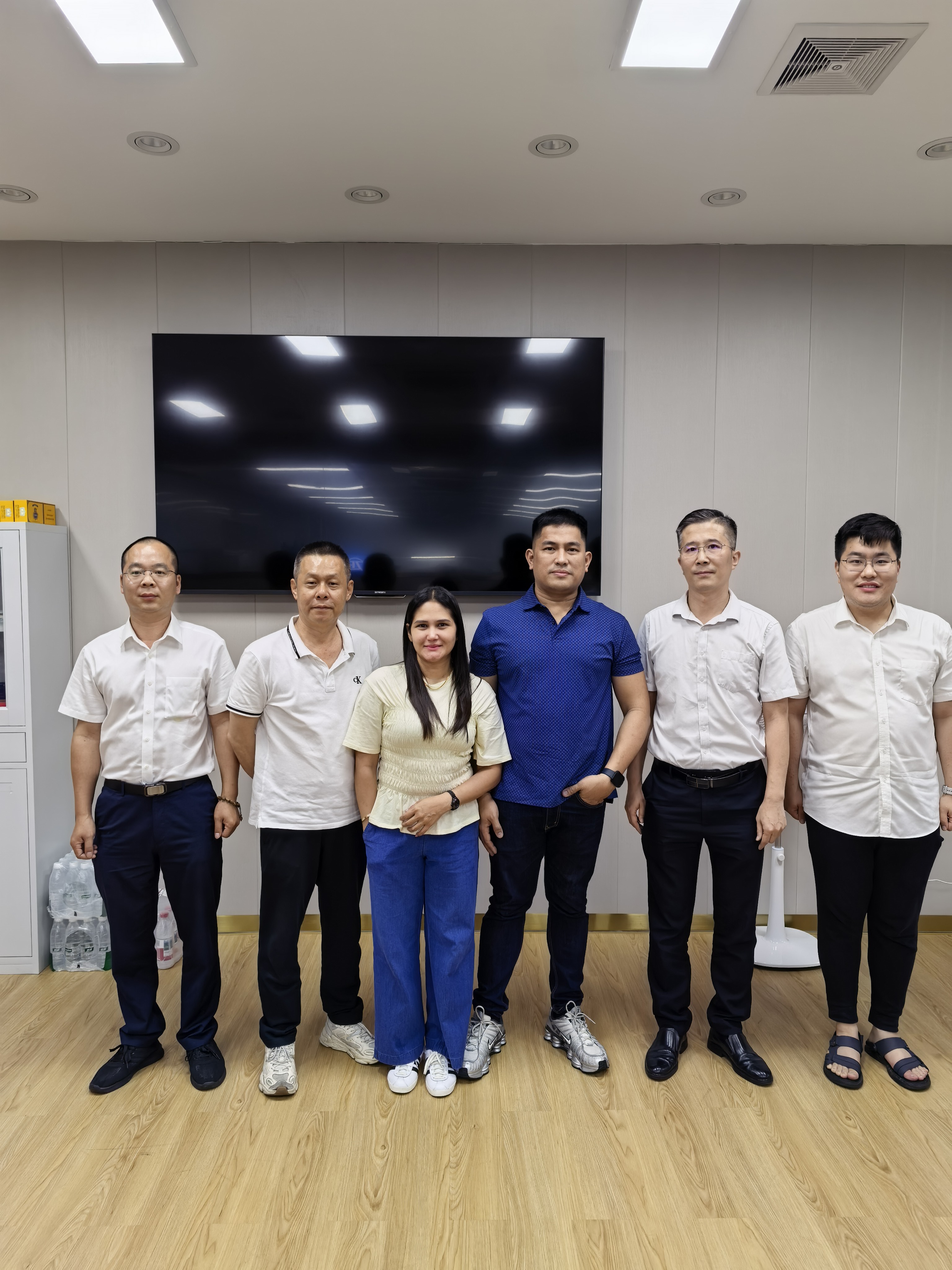
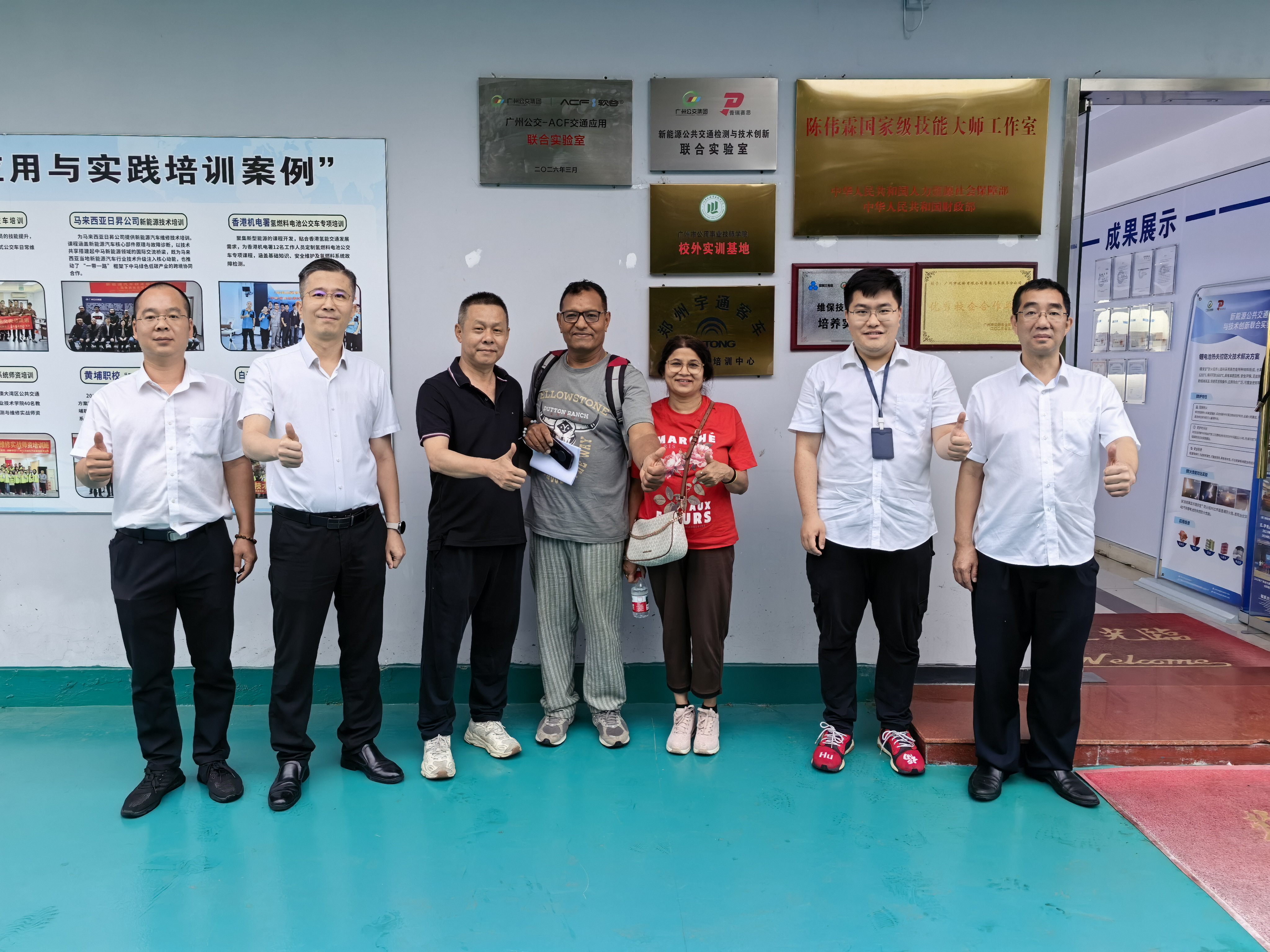
Last updated: June 2026 — This guide is based on conversations with independent garage owners who completed our 7-day training program and launched battery repair businesses in their home markets. It also draws on equipment procurement data and battery system documentation from our partner facility in Guangzhou.
Why Battery Repair Is the Smartest Entry Point into EV Service
After each training session in Guangzhou, we hear the same question from workshop owners:
"I don't want to open a full EV workshop. I just want to fix batteries. Is that a viable business?"
The answer is yes — and it may be the smartest entry path available. Here's why:
🚀 Five reasons battery-only repair beats full EV workshop as a starting point:
1. Lower equipment cost: ¥55,300 vs ¥79,800+ for full three-electric capability
2. Simpler skill path: Master one system before expanding to motors and controllers
3. Larger addressable market: Every EV eventually needs battery work — not every EV needs a motor rebuild
4. Higher margins: Battery repair commands premium pricing (¥3,000-15,000 per job) with 50-65% margins
5. Complements existing business: Add battery service to an ICE garage without full EV conversion
The Market Reality: Why Battery Repair Demand Is Exploding
Chinese EV exports have surged since 2022. Across international markets, Chinese EVs are now a dominant force — and many of those vehicles are approaching the mileage where battery service becomes necessary.
Here's the math that makes battery repair inevitable:
📊 The Battery Aging Timeline
• 0-80,000 km: Battery under warranty, minimal repair demand
• 80,000-150,000 km: 🎯 Sweet spot — capacity fading, cell imbalance, BMS warnings begin
• 150,000+ km: Major degradation, module replacement needed
Most BYD Atto 3 and Seal vehicles exported in 2023-2024 will hit this window in 2026-2028.
🔧 What Authorized Dealers Won't Do
• Will only replace entire battery packs ($8,000-15,000), not individual modules
• Wait times of 3-6 weeks for pack delivery from China
• Refuse to service vehicles with "non-standard" battery degradation patterns
This creates a massive gap for independent shops offering module-level repair at ¥3,000-8,000.
Two Business Models: Shop vs. Mobile
Trainees in our program have successfully launched two distinct battery repair business models. Both work — the right choice depends on your local market, existing facilities, and risk tolerance.
🏭 Model A: Dedicated Battery Repair Shop
Best for: Existing garage owners, urban locations, multi-brand markets
- Fixed location with full battery equipment suite
- Can handle pack removal, disassembly, cell replacement
- Capable of BMS reprogramming and balancing
- Higher trust from customers (permanent presence)
- Can build dealer and fleet relationships
Startup cost: ¥55,300 equipment + ¥23,800 training = ¥79,100 ($10,900)
Monthly revenue potential: ¥30,000-80,000
🚐 Model B: Mobile Battery Diagnostic Service
Best for: Testing the market, rural/suburban areas, low upfront capital
- Service vehicle with diagnostic tools
- On-site battery health checks and fault code reading
- Cell balancing for minor imbalance issues
- Refer major repairs to partner shop (revenue share)
- Low overhead, fast to launch
Startup cost: ¥32,000 equipment + ¥23,800 training = ¥55,800 ($7,700)
Monthly revenue potential: ¥15,000-30,000 (diagnostics only)
Pro tip from our overseas trainee: "I started mobile, built a customer list over 3 months, then opened a small shop. The mobile phase proved there was demand — and customers already trusted me when I opened the physical location." This phased approach is the lowest-risk path.
What Equipment You Actually Need for Battery Repair
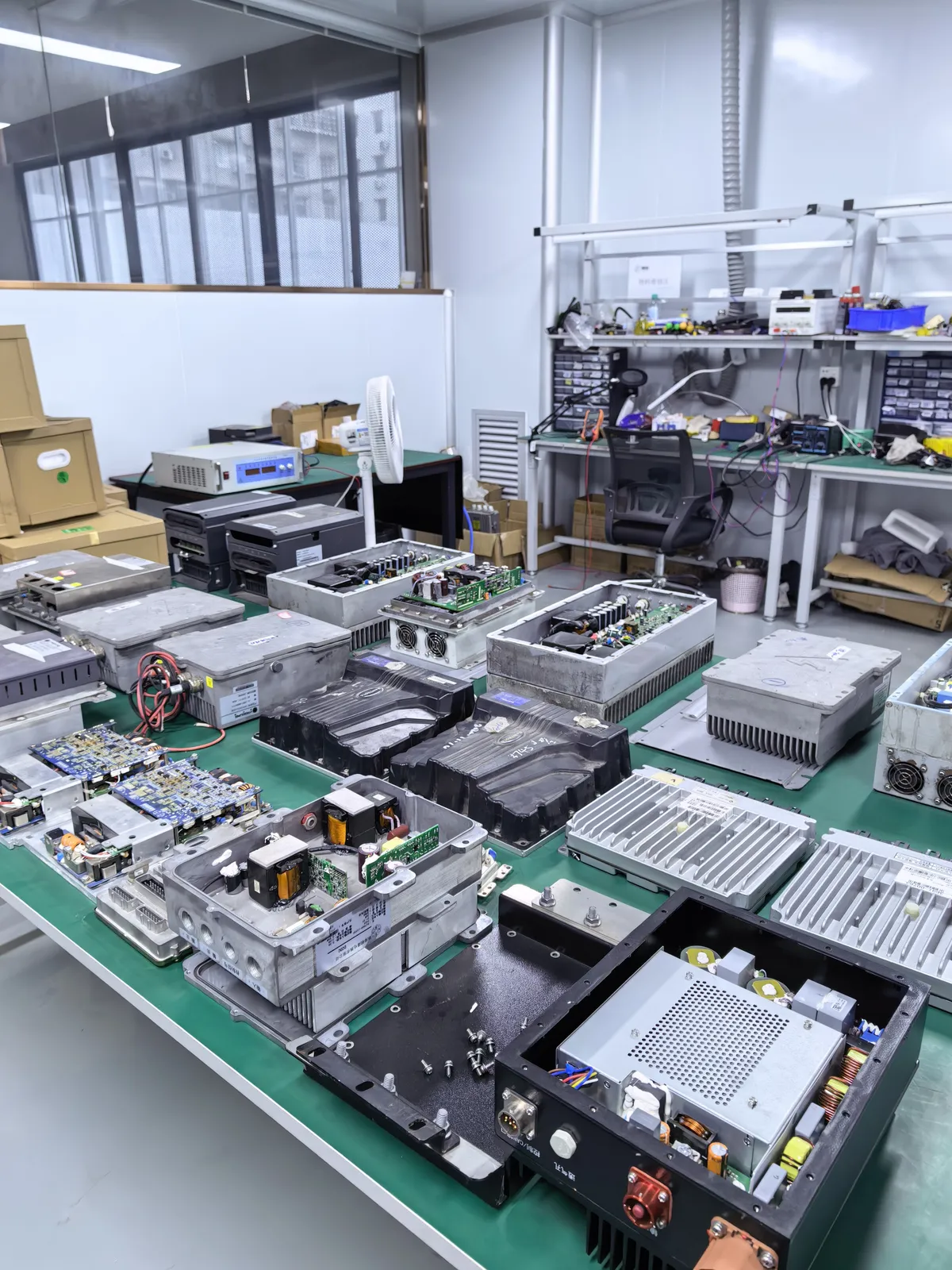
This is not a wish list. This is the exact equipment used in our Guangzhou partner facility for battery diagnosis and repair, verified by trainees who ordered the same items for their own shops. For a detailed cost breakdown across all EV repair categories — including lifts, diagnostic platforms, and workshop infrastructure — see our EV Workshop Equipment Cost Guide.
| Category | Equipment | What It Does | Price (¥) |
|---|---|---|---|
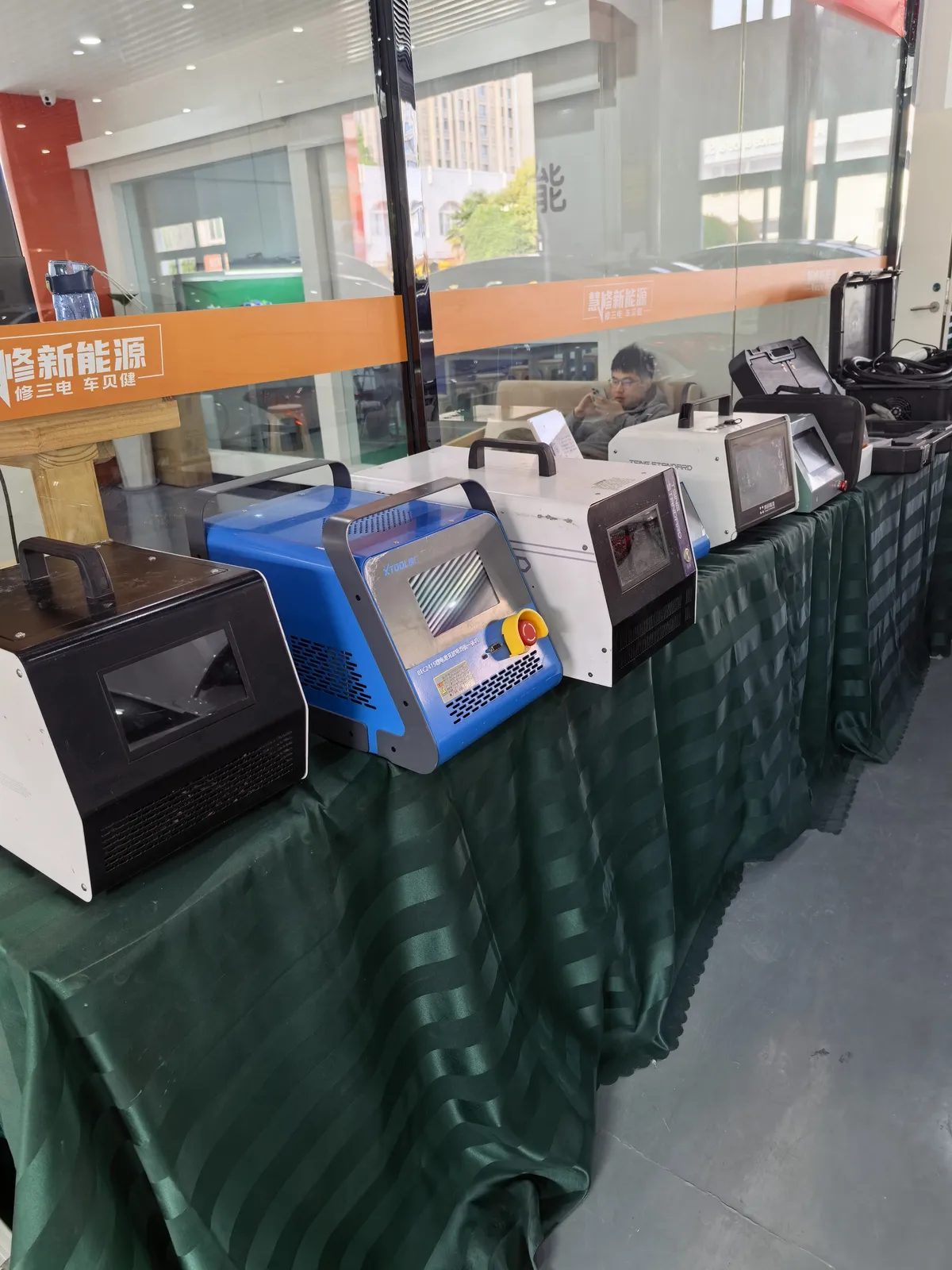
| Core Tool | Battery balancing machine | Cell-level voltage equalization and capacity testing. Identifies weak cells in series packs. Supports BYD Blade (LFP, 3.2V), CATL (NMC, 3.7V), Gotion (LFP, 3.2V). This is the heart of any battery repair shop. | 8,000 |
| Core Tool | BMS diagnostic programmer | Reads BMS fault codes, state-of-health (SOH) data, cell voltage maps, and temperature logs. Can reset BMS adaptation values after module replacement. Supports BYD, CATL, and Gotion BMS protocols. | 12,000 |
| Safety | Insulation tester (1000V DC) | Measures insulation resistance between high-voltage components and chassis ground. Required before and after any battery pack service. | 2,800 |
| Safety | HV safety gear set | Class 0 insulated gloves (1000V rated), face shield, arc-flash rated clothing, insulated tools. Non-negotiable for live battery work. | 1,200 |
| Handling | Hydraulic battery lift table | Rated 1,000 kg with scissor lift. Safely lowers battery packs (BYD Blade pack weighs ~420 kg, CATL pack ~380 kg). Includes securing straps and alignment guides. | 6,500 |
| Diagnostic | Multi-brand OBD scanner | Reads battery-related DTCs across Chinese EV brands. Covers BYD, Chery, Geely, Changan, GAC Aion, JAC, Haval, Great Wall ORA. Includes battery-specific live data streaming. | 4,500 |
| Diagnostic | Battery load tester | Conductance and capacity testing for individual modules. Essential for confirming which modules need replacement vs. rebalancing. | 3,200 |
| Diagnostic | Thermal camera (handheld) | Identifies hot spots during charging/discharging — a critical diagnostic tool for detecting internal short circuits before they become thermal events. | 3,500 |
| Workshop | EV-compatible lift (3.5T) | Vehicle elevation with battery pack access. Required for pack removal on most EVs where the battery is mounted under the floor. | 8,500 |
| Workshop | Tool sets & insulated storage | Insulated socket set, torque wrench, bus bar cleaning kit, module compression tools, labeled storage racks for removed modules. | 3,500 |
| Safety | Li-ion fire suppression system | Class D fire extinguisher rated for lithium battery fires + smoke detection in battery storage area. Required by most insurers. | 1,600 |
💰 Equipment Total: ¥55,300 ($7,600) + Workshop setup (ventilation, battery storage racks, signage): ~¥8,000 ($1,100) = All-in hardware startup: ~¥63,300 ($8,700)
Want Us to Source This Equipment for You?
We source and ship the complete battery repair equipment package from China. ¥55,300, 25 items, global delivery in 30-45 days. No sourcing fees.
View Equipment Packages →Chinese EV Battery Systems: What You'll Actually Be Working On
You don't need to know every battery system in existence. Focus on the three that power the vast majority of Chinese EVs exported to your market:
| Battery System | Chemistry | Vehicles | Common Faults | Repairability |
|---|---|---|---|---|
| BYD Blade Battery | LFP (LiFePO₄), 3.2V/cell | BYD Atto 3, Seal, Han, Dolphin, Song Pro | Cell imbalance after 120K km, BMS reporting inaccurate SOH, module-to-module voltage drift up to 0.2V | Good — Modular design, cells accessible, balancing fixes most issues. Cell-level voltage equalization with balancing machine resolves 70% of complaints. |
| CATL Prismatic Modules | NMC (LiNiMnCoO₂), 3.7V/cell | Geely Geometry C, Coolray EV, Zeekr 001, Changan Eado EV | Capacity fade after 80K km, module swelling, coolant ingress into pack housing | Moderate — Swollen modules require replacement. Coolant leaks need gasket replacement and thorough drying. Module-level repair is standard. |
| Gotion Cylindrical / Prismatic | LFP, 3.2V/cell | Chery eQ1, eQ7, JAC e-JS series, some Haval hybrids | Individual cell failure in parallel groups, spot-weld fractures on bus bars, BMS communication dropouts | Good — Cylindrical cells replaceable individually. Prismatic modules similar to CATL. Bus bar re-welding is a common repair. |
Common BYD Blade Battery Problems Seen After 100,000 km
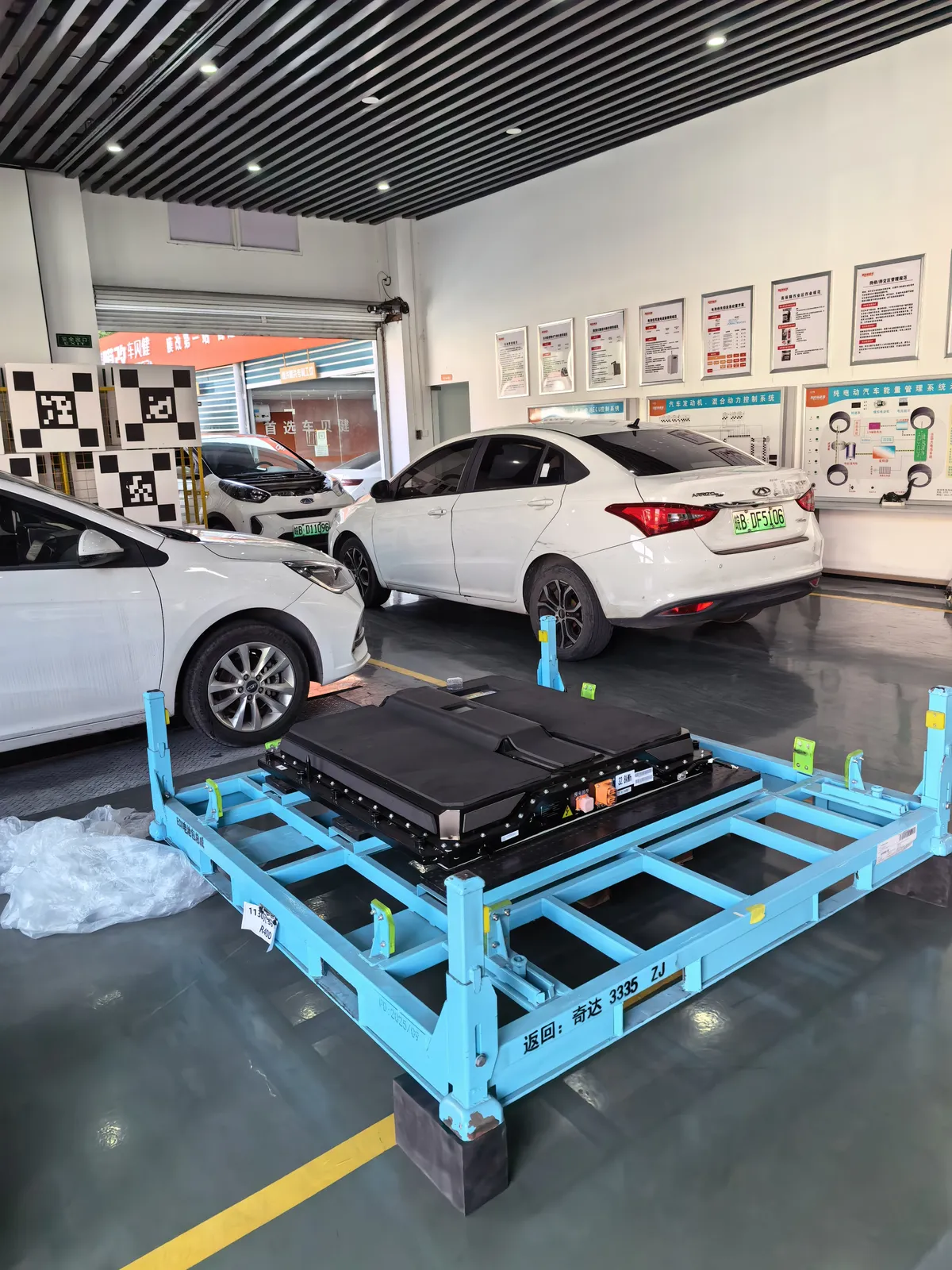
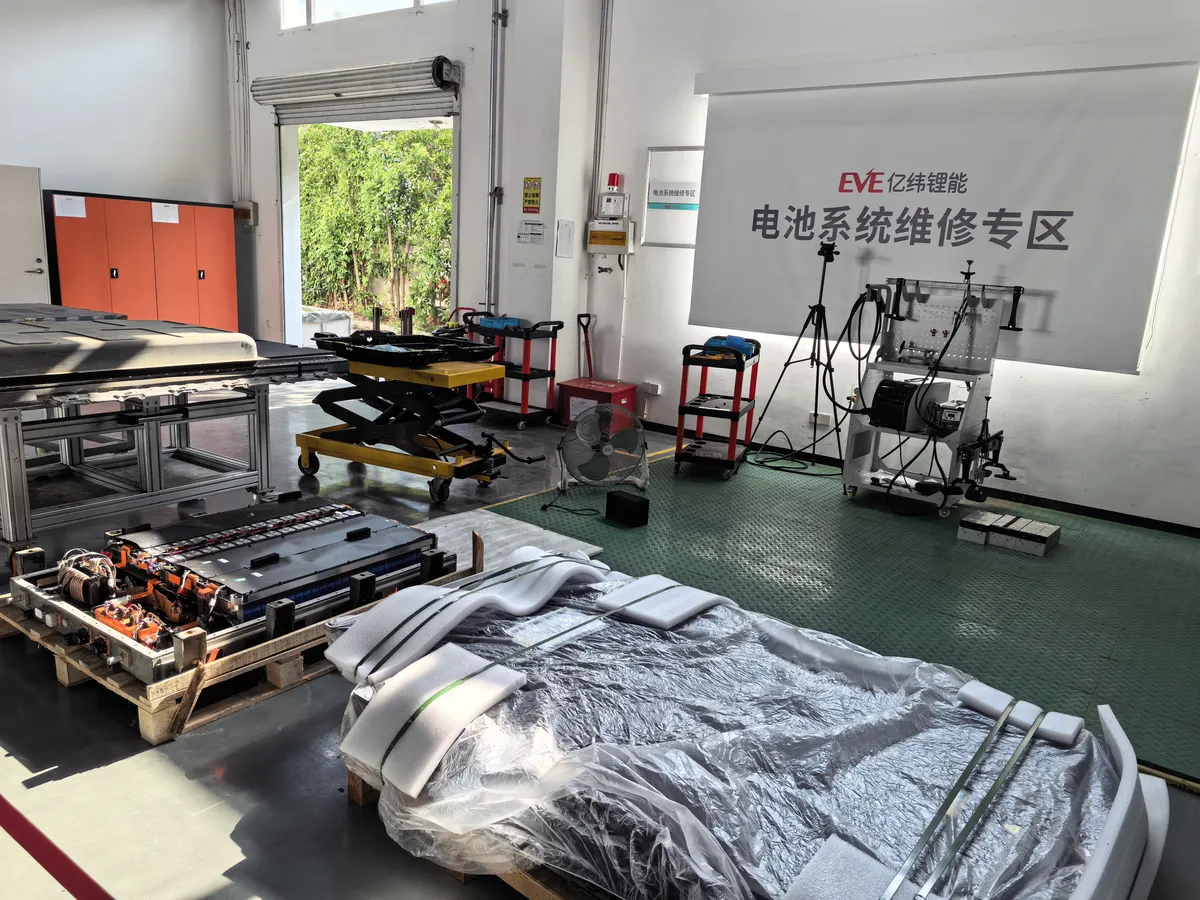
The BYD Blade Battery — used in Atto 3, Seal, Han, and Dolphin — is the most frequently serviced battery system at our Guangzhou training facility. Its LFP chemistry and modular "blade" design make it more repair-friendly than most NMC packs, but three recurring issues account for the vast majority of the repair work independent shops can handle. Below is what we see regularly, based on actual diagnostic and repair data.
1. Cell Imbalance — The #1 Most Common BYD Issue
What it looks like: After 100,000–150,000 km, individual cells within a Blade pack can drift apart by 50–200 mV. The customer notices reduced range (10–20% loss), slower charging, or a dashboard warning for "Battery System Service Required." On a diagnostic scan, the BMS reports one or more cells with significantly lower voltage than the pack average.
Root cause: LFP cells age at slightly different rates depending on thermal exposure. Cells at the center of the pack run 3–5°C hotter than edge cells, accelerating their degradation. The BMS charges all cells to the same target voltage, but if some cells have higher internal resistance, they reach that voltage earlier — creating a cumulative imbalance over tens of thousands of kilometers.
Repair approach: Connect a professional battery balancing machine to the cell monitoring unit (CMU) connector. The balancing machine discharges high cells and charges low cells until all are within ±10 mV. This takes 4–8 hours on a full pack and resolves the range complaint in approximately 70% of cases without replacing any modules.
2. SOC Mismatch and BMS False Degradation Alerts
What it looks like: The dashboard shows 100% charge, but actual range is only 70% of what it should be. Or the BMS reports "State of Health (SOH) 72%" even though all cells test within specification. This is a software/calibration issue, not a physical battery problem — but customers are often told they need a full pack replacement.
Root cause: The BMS tracks state of charge (SOC) by counting coulombs in and out and periodically recalibrates. If the calibration reference drifts — common after partial charging cycles or long periods of storage — the BMS underestimates usable capacity. This creates a "false degradation" alert that reads as permanent capacity loss when no cells are actually faulty.
Repair approach: Perform a controlled full discharge → full charge cycle with diagnostic software monitoring cell voltages throughout. Then run a BMS adaptation reset using a compatible diagnostic tool (part of the ¥55,300 equipment package). After reset, the BMS recalculates SOH from actual cell data. We've seen "70% SOH" packs recover to 88–94% after proper recalibration — saving the customer thousands in unnecessary replacement costs. If you encounter a case you're unsure about, our Remote Battery Diagnostics service provides real-time guidance from Guangzhou-based engineers familiar with these exact repair scenarios.
3. Module-to-Module Voltage Drift
What it looks like: Unlike cell-level imbalance, this affects entire modules (groups of cells wired in series-parallel). One or two modules show voltage 0.3–0.5V below the rest of the pack under load. The BMS limits total power output to protect the weak module, causing noticeable acceleration reduction and fast-charging throttling.
Root cause: A single degraded cell within a module drags down the entire module's voltage. Because Blade modules are welded into sub-assemblies, you can't replace one cell — you replace the module. The most common cause is uneven cooling: modules at the rear of the pack experience less airflow and degrade faster.
Repair approach: Identify the weak module via voltage mapping under load. Order a replacement module (we stock BYD Blade modules for Atto 3 and Seal). Disconnect the pack, remove the degraded module, install the replacement, torque bus bar connections to OEM spec (critical — loose connections create hot spots), and perform full pack balancing. Total repair time: 1–2 days including parts sourcing. Search OE database for module part numbers →
📚 Training coverage: Our 7-day Guangzhou program includes hands-on practice with all three battery systems. Days 4-5 are dedicated to pack disassembly, cell-level diagnosis, BMS communication troubleshooting, and module replacement on actual BYD Blade and CATL battery packs. The fault categories above are covered in detail — trainees diagnose and repair at least two live battery issues during the program.
📚 Coming Soon — Deep-Dive Battery Repair Guides
We're developing detailed standalone guides for each major battery system. These will include step-by-step repair procedures, torque specifications, module part numbers, and compatibility cross-references.
BYD Blade Battery
Repair Guide
Coming Q3 2026
CATL Battery
Diagnostics Guide
Coming Q3 2026
Gotion Battery
Repair Guide
Coming Q4 2026
Real Revenue: What a Battery Repair Shop Can Earn
Revenue projections based on workshop setup consultations and post-training feedback — adjusted for market differences and service mix:
| Service Type | Jobs/Month | Price/Job (¥) | Monthly Revenue (¥) | Margin |
|---|---|---|---|---|
| Battery health diagnostic (OBD + thermal) | 15 | 500-800 | 9,750 | 75% |
| Cell balancing (no parts) | 10 | 1,500-3,000 | 22,500 | 80% |
| Module replacement (1-3 modules) | 4 | 4,000-8,000 | 24,000 | 40-50% |
| BMS programming / adaptation reset | 6 | 800-1,500 | 6,900 | 90% |
| Contactor / HV fuse replacement | 3 | 1,500-3,000 | 6,750 | 55% |
| Total Monthly Revenue: | ¥69,900 | ~60% avg | ||
📊 Payback Scenarios — How Long Until You Recover the Equipment Investment?
The following scenarios assume a ¥55,300 equipment investment. Actual results depend on your local market, service pricing, and how quickly you build a customer base. The revenue table above reflects a moderate-volume shop (38 jobs/month).
| Scenario | Monthly Jobs | Est. Monthly Revenue | Est. Payback Period |
|---|---|---|---|
| Conservative — New market entry, ~2-3 cars/week, building reputation | 8-15 | ¥15,000-30,000 | 10-14 months |
| Moderate ★ — Steady shop with repeat customers, ~5-8 cars/week | 25-40 | ¥40,000-75,000 | 3-6 months |
| Aggressive — Busy location in major city, ~10-15 cars/week | 50-70 | ¥80,000-130,000 | 1-3 months |
★ The Moderate scenario is the most common outcome among trainees who combined equipment purchase with our 7-day training program. Total upfront: ¥55,300 equipment + ¥23,800 training = ¥79,100. Net profit margins on battery repair typically range 50-65%.
📋 Download Battery Repair Equipment Checklist
Complete equipment list with model numbers, supplier pricing, and mandatory safety gear — the same checklist we use for new workshop setup consultations.
📱 Request Checklist via WhatsAppWe respond within 2 hours during business hours (GMT+8)
Safety and Legal Requirements: What You Must Know Before Opening
EV battery repair involves 400-800V DC systems with enough current to be lethal. Safety is not optional — it is the foundation of your business. Here's what's required in most countries:
⚡ Mandatory Safety Requirements
- Level 3 or 4 HV safety certification (IEC 62446 or national equivalent)
- Class 0 insulated gloves tested every 6 months
- Lockout/tagout (LOTO) procedures for battery service
- Li-ion fire suppression (Class D extinguisher minimum)
- Battery storage area with fire-rated walls
- Emergency response plan for thermal runaway
- Insurance that specifically covers HV battery work
📋 Business Compliance Checklist
- Business registration with EV repair classification
- Environmental permit for battery waste handling
- Data protection compliance (battery SOH data is personal)
- Partnership with licensed battery recycler for end-of-life modules
- Customer waiver forms for out-of-warranty battery work
- Technician certification records on file
- Equipment calibration logs (required by some insurers)
⚠️ Important: Safety certifications and business licensing requirements vary significantly by country. Our training includes HV safety certification, but you must verify local requirements independently before opening.
Frequently Asked Questions
How much does it cost to start an EV battery repair business?
A dedicated EV battery repair shop requires approximately ¥55,300 ($7,600 USD) in equipment: battery balancing machine, hydraulic lift, BMS programmer, insulation tester, HV safety gear, and basic workshop tools. A mobile battery diagnostic service can start for ¥32,000 ($4,400). Both figures exclude training costs (¥23,800/person for our 7-day Guangzhou program).
How much can an EV battery repair business make per month?
Based on feedback from trainees who launched battery repair businesses, a well-positioned shop serving Chinese EV brands can generate ¥30,000-50,000/month ($4,100-6,900) from battery work alone in a medium-sized city, scaling to ¥60,000-80,000/month in busier markets. Mobile diagnostic-only services average ¥15,000-30,000/month. Profit margins on battery repair typically range 50-65%.
What battery types can an independent shop actually repair?
With the right equipment and training, independent shops can repair lithium-ion battery packs using BYD Blade cells (LFP), CATL prismatic modules (NMC), and Gotion cylindrical/prismatic configurations (LFP). Common repairable issues include cell imbalance, degraded modules, BMS communication errors, contactor failures, and coolant leaks. Complete pack replacement should only be done with OEM-grade modules — we supply these through our EV parts supply service.
What safety certifications do I need to repair EV batteries?
Requirements vary by country. Generally, you need: Level 3 or 4 high-voltage safety certification (IEC 62446 or equivalent), workshop fire safety compliance for lithium battery storage, proper insurance for high-voltage work, and technician training certification. Our 7-day Guangzhou training includes HV safety certification. Always check local regulations before opening — each jurisdiction has its own EV service certification standards, and frameworks continue to evolve.
Is mobile EV battery repair a viable business model?
Yes. A popular entry model is mobile battery diagnostics with a service vehicle equipped with an OBD scanner (¥4,500), insulation tester (¥2,800), battery load tester (¥3,200), and thermal camera (¥3,500). Total mobile startup: ¥32,000 ($4,400). You diagnose on-site and either perform minor cell balancing or refer major repairs to a partner shop. Several overseas trainees launched this way, building client lists before investing in a fixed location.
How long does it take to train as an EV battery repair technician?
Our 7-day intensive program in Guangzhou covers battery-specific skills: Days 1-2 cover HV safety and battery fundamentals, Day 3 focuses on cell balancing and BMS diagnostics, Day 4 on pack disassembly and module replacement, Day 5 on advanced diagnosis and CAN network troubleshooting, and Days 6-7 on hands-on practice with BYD Blade and CATL battery packs. Prior auto repair experience (2+ years) is strongly recommended but not mandatory.
Which EV brands create the most battery repair demand?
Based on export order patterns and trainee feedback, BYD (Atto 3, Seal, Han) generates the highest battery repair demand, followed by Geely (Geometry C, Coolray EV), Chery (eQ series), and JAC (e-JS series). These brands are rapidly expanding in international markets, and many are approaching 80,000-150,000 km where battery degradation becomes noticeable. The BYD Blade battery's modular design makes it especially suitable for independent repair.
Can I get battery parts and replacement modules from NEV Fix?
Yes. We supply OEM and aftermarket battery modules, cells, BMS units, contactors, and cooling components for BYD, CATL, and Gotion battery systems. Our 500+ OE parts database includes battery-specific part numbers with verified pricing. We also provide compatibility guidance — for example, confirming the correct BYD Blade module variant for an Atto 3 vs. Seal. Contact us via WhatsApp for bulk module pricing.
What's the payback period for a battery repair shop investment?
The payback period varies by scenario. Conservative (new market, ~2-3 cars/week): 10-14 months. Moderate ★ (steady shop, ~5-8 cars/week): 3-6 months. Aggressive (busy city location, ~10-15 cars/week): 1-3 months. Total upfront investment: ¥55,300 equipment + ¥23,800 training = ¥79,100 ($10,900). The Moderate scenario is the most common outcome — most shops reach this within one quarter. See the full payback scenario table above for details.
Do I need a full EV workshop before starting battery repair?
No. Battery repair is one of the best entry paths precisely because you do NOT need full three-electric capability. You can start with battery-specific equipment only (¥55,300) and gradually add motor and controller tools as demand grows. Many overseas trainees launched battery-only shops within existing ICE garages, using one bay for battery work while continuing traditional service in the rest of the shop. This hybrid model reduces risk and lets you test the market with minimal investment.
Is EV battery repair legal in my country?
In most countries, yes — provided you meet local safety and business licensing requirements. Key regulations vary by jurisdiction: HV certification standards differ across markets. We recommend checking with your local automotive trade association. Our 7-day training includes internationally recognized HV safety certification that satisfies requirements in most markets.
Can a normal mechanic learn EV battery repair?
Yes. Many of our trainees came from traditional ICE repair backgrounds with zero EV experience. The core skills — diagnostic logic, mechanical disassembly, electrical measurement — transfer directly. What's new is HV safety protocol, CAN bus communication, and battery management system (BMS) software. Our 7-day program is designed specifically for experienced mechanics transitioning to EV: Days 1-2 cover the safety and fundamentals gap, and by Day 7 most participants are independently diagnosing and balancing battery packs.
How long does BYD battery balancing take?
A full cell balancing session on a BYD Blade battery pack typically takes 4-8 hours, depending on the number of cells and the degree of imbalance. Minor balancing (voltage drift within 50mV) can be completed in 2-3 hours. Severe imbalance cases with multiple degraded cells may require module replacement plus balancing, extending to 1-2 days. The actual balancing time depends on your equipment — professional-grade balancing machines (like those in our ¥55,300 equipment package) complete the process faster and more accurately than entry-level tools.
Do I need a battery balancing machine?
Yes — a battery balancing machine is the core tool for EV battery repair. Without one, you cannot equalize cell voltages after module replacement or diagnose imbalance-related degradation. Manual balancing with individual chargers is possible but takes days and introduces risk of overcharging. Professional balancing machines (included in our ¥55,300 equipment package) automate the process, log cell data for reporting, and support multiple battery chemistries including LFP (BYD Blade) and NMC (CATL/Gotion). Entry-level balancing machines start at approximately ¥15,000-25,000.
Ready to Launch Your Battery Repair Business?
Get hands-on training, order equipment, or check battery module availability — whatever stage you're at, we can help you move forward.
📖 Related Reading:
→ How Much Does It Cost to Start an EV Repair Workshop in 2026? — Full equipment budget comparison for those considering expanding beyond battery work
→ 7-Day EV Repair Training Program — Curriculum, dates, pricing, and registration
→ Remote Diagnostic Support Service — Real-time technical support for battery repairs you're unsure about