The owner in Iraq saw a message on the instrument cluster that made no sense:
"Please disconnect the charging cable before shifting into drive."
The problem was simple — there was no charging cable connected.
The BYD Seal 05 (also sold as the Destroyer 05 in some markets) was parked at a workshop in Iraq. The vehicle would intermittently refuse to enter drive mode, showing this false warning. Sometimes it started normally; other times it was immobilized. The local technician ran a full scan with a generic diagnostic tool — zero DTCs. Everything appeared normal.
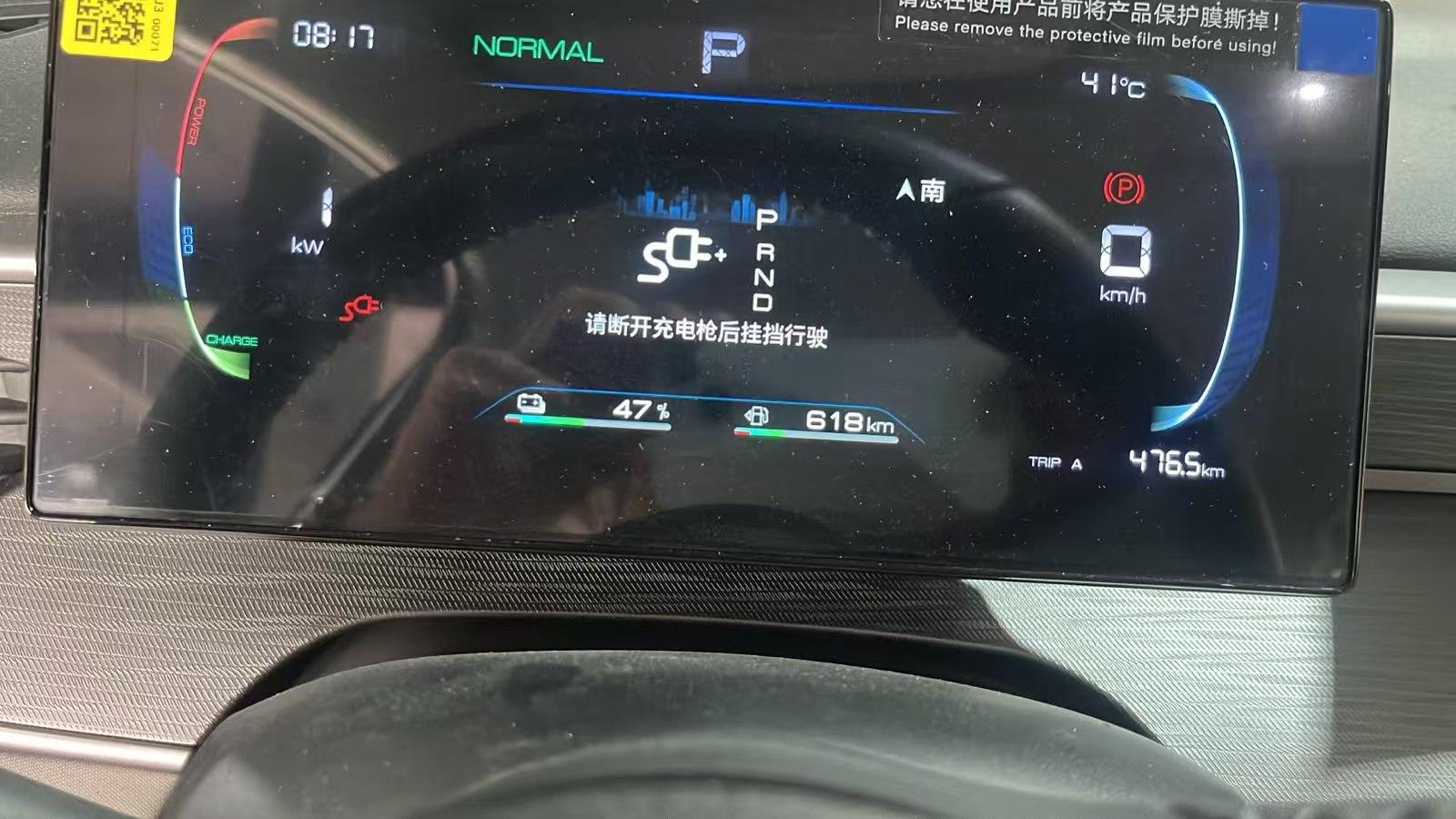
The instrument cluster warning that started the case — a false alarm with no charging cable connected. Source: NEV Fix remote diagnostic session, Iraq, July 2026.
🛑 The Problem: A BYD Seal 05 That Could Not Enter Drive Mode
Vehicle Details
| Model | BYD Seal 05 / Destroyer 05 |
| Platform | 5th-gen DM-i |
| Location | Iraq |
| Power | 220V single-phase |
Fault Characteristics
| Symptom | False "disconnect charging cable" |
| Frequency | Intermittent |
| Local Scan | Zero DTCs |
| Impact | Vehicle cannot drive |
This was a diagnostic dead end for the local workshop. The car showed a clear symptom — a warning message that shouldn't appear — but no scanner in the workshop could find a corresponding fault code. The technician reached out to NEV Fix for remote diagnostic support via SmartLink.
For readers unfamiliar with our remote diagnostic approach, see our earlier BYD Sealion 07 Ukraine case study and the Chery SGW diagnostic methodology breakdown for more examples of how we approach these situations.
🔍 Why Normal Scanners Found Nothing
This is the part that confuses many workshops — and it's worth understanding in detail.
(not charging)
no charging handshake triggered
fault invisible to scanner
Based on the diagnostic data observed during this case, here is what appeared to be happening:
The charging-related fault did not become visible during static scanning. When the vehicle was powered on but not charging, all modules — including the Power Domain Controller — reported normal status. The fault became detectable only when the charging process was initiated, suggesting that the relevant communication pathway within the PDC was activated under charging conditions.
In other words, the PDC's internal fault was effectively invisible to diagnostic tools until the controller attempted to execute a charge cycle. During static mode:
- The PDC did not report any DTC because the charging communication circuit that contained the hardware fault was not electrically active
- The instrument cluster displayed the "disconnect charging cable" message, suggesting the PDC's output signal was incorrectly indicating a "charging" state — even though no input was active
- The vehicle's drive-interlock system, receiving a "charging" status from the PDC, prevented the vehicle from entering drive mode
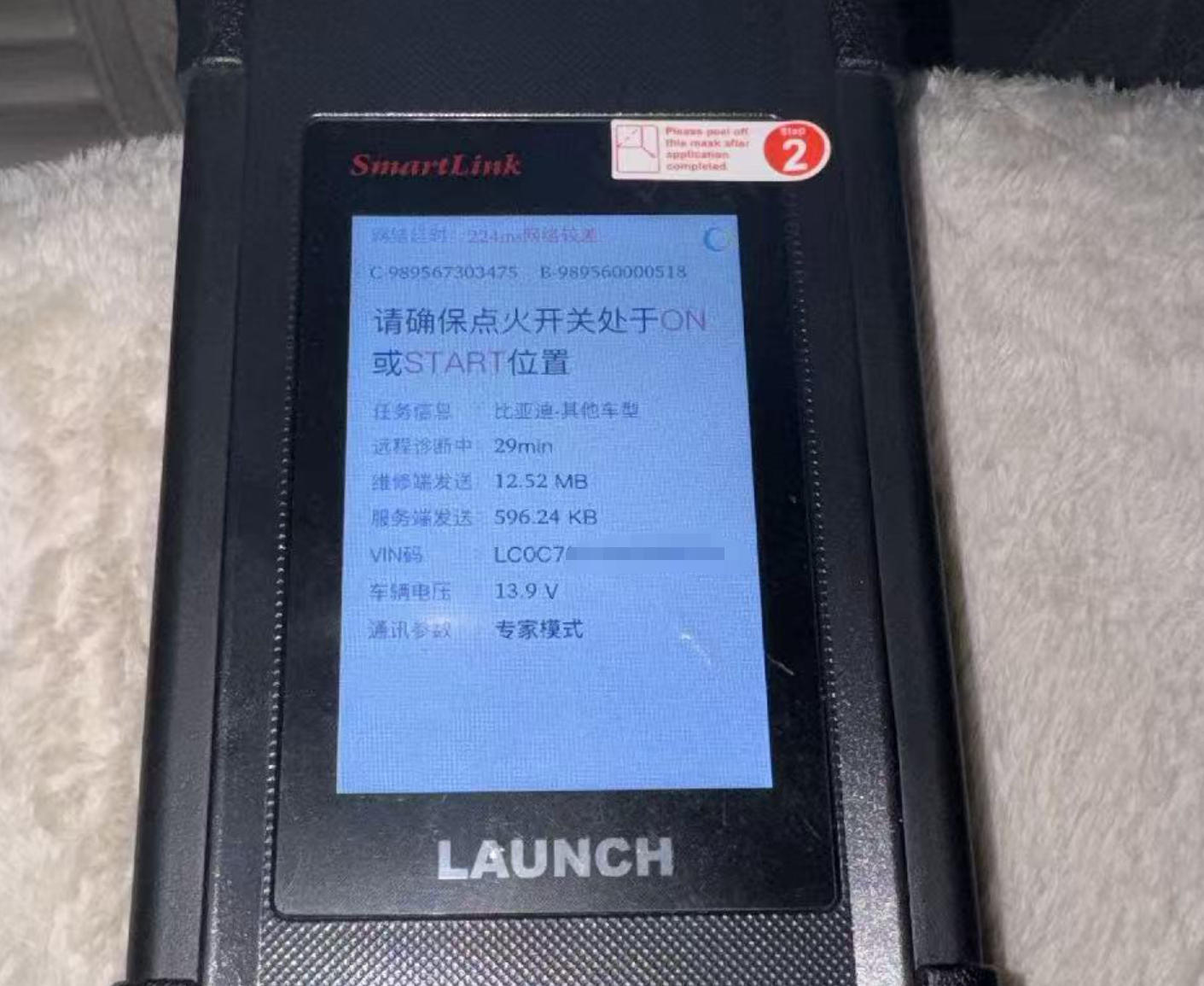
NEV Fix SmartLink C remote diagnostic session in progress at the Iraq workshop. The device enables real-time data stream access from Guangzhou. Source: NEV Fix remote session, July 29, 2026.
⚠️ Key Diagnostic Insight
A static scan is insufficient for intermittent charging-related faults. The fault exists in hardware but only becomes electrically active when the charging communication circuit is energized. This is why the local workshop's generic scanner — and our own initial scan — returned zero DTCs. The diagnostic window opens only during a charging attempt.
📡 Remote Diagnosis Process: Step by Step
The diagnostic session spanned two days (July 29-30, 2026). Here is the complete workflow, annotated with what we learned at each step.
Phase 1: SmartLink Connection & BC Mode Switch
Establishing the remote connection was the first hurdle. The SmartLink device required a switch from OBD power to external power supply and entry into C-mode for full diagnostic access — a process familiar to anyone who has done remote diagnostics on Chinese EVs. After several attempts, the connection stabilized.
Finding 1 Connection established. Device successfully in C-mode.
Phase 2: Static Full-System Scan — Zero DTCs
With the vehicle powered on but not charging, we performed a complete system scan through SmartLink. Every module reported normal status. The instrument cluster was still showing the false warning, but no module had stored a related fault code.
Finding 2 Static scan clean. No DTCs in any module. Fault active but invisible.
Phase 3: Activate Charging Condition — The Breakthrough
Based on the symptom (charging-related warning), we instructed the customer to insert the 220V charging cable and keep it connected — even though the vehicle was not actually entering charge mode. We then re-scanned while the charging cable was physically connected.
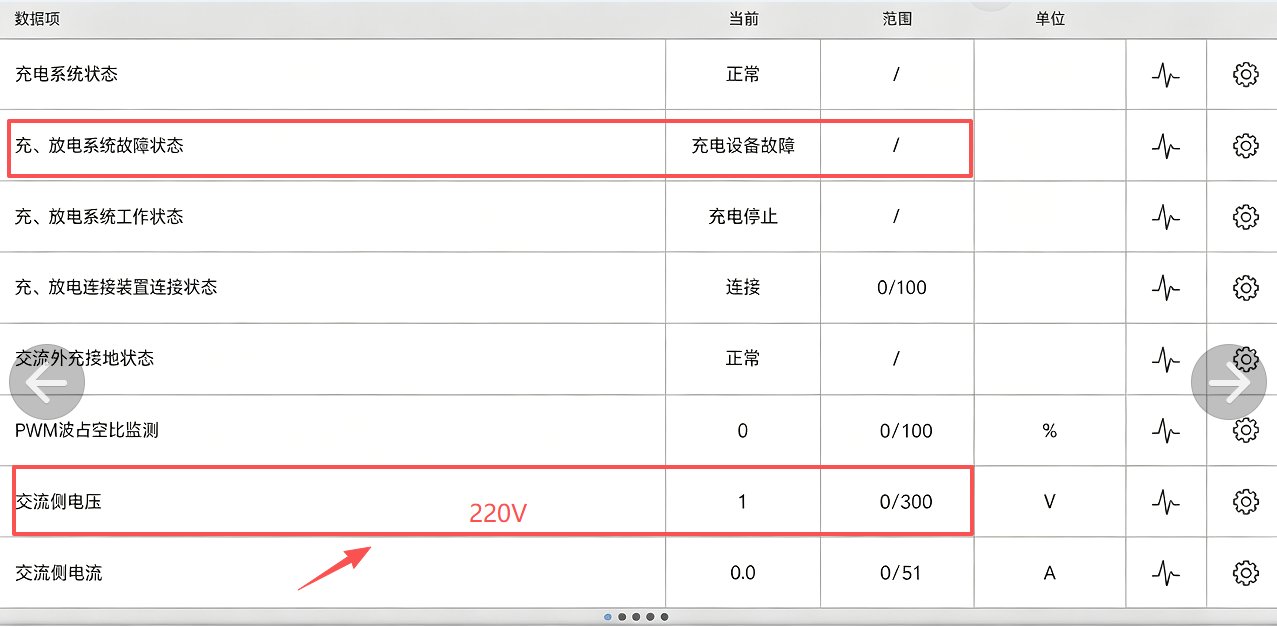
Charging-state diagnostic scan reveals the fault. With the 220V cable connected, the Power Domain Controller attempted a charge cycle — and the dormant hardware fault became visible in live data. Source: NEV Fix remote session, July 29, 2026.
The data told the story: the AC input side registered 220V from the charging cable, but the vehicle never entered the actual charging state. The PDC acknowledged the physical cable connection, attempted to negotiate the charge, and immediately flagged a "charging equipment fault" — confirming that the controller's internal charging communication module was not functioning.
Finding 3 Charging-state scan revealed fault. AC 220V present, charging not initiated. PDC charging communication failure.
Phase 4: Hardware Inspection — Insurance Check
Before concluding it was a controller failure, there was one more thing to rule out: a blown fuse on the charging circuit. This required physical inspection — and because the PDC is on the high-voltage side, it required strict safety protocol.
⚡ High-Voltage Safety Protocol
Before inspecting the Power Domain Controller or its fuses, the technician was instructed to: (1) disconnect the 12V battery negative terminal to de-energize control circuits, and (2) leave the driver's door open to prevent the keyless entry system from locking the technician out during a power-loss event. These are standard precautions when working near high-voltage components on any Chinese EV platform.
The fuse was intact. This eliminated the last alternative explanation.
Finding 4 PDC fuse intact. Hardware failure confirmed in the controller itself.
Complete Diagnostic Flow
0 DTCs
Fault Detected
Intact
Confirmed
✅ Final Diagnosis: Power Domain Controller Hardware Failure
The Power Domain Controller (PDC) is a critical module in BYD's 5th-gen DM-i electrical/electronic architecture. It manages charging communication, high-voltage interlock monitoring (HVIL), and power distribution logic between the battery, motor controller, and onboard charger.
When the PDC's internal charging communication module develops a hardware fault, it can produce exactly the symptoms seen in this case:
- False "charging" status output — the controller incorrectly signals to the instrument cluster and drive-interlock system that the vehicle is charging
- No static DTC — the fault circuit is dormant until a charging attempt energizes it
- AC input detected, no charge initiation — the controller sees the 220V input but cannot complete the charging handshake protocol
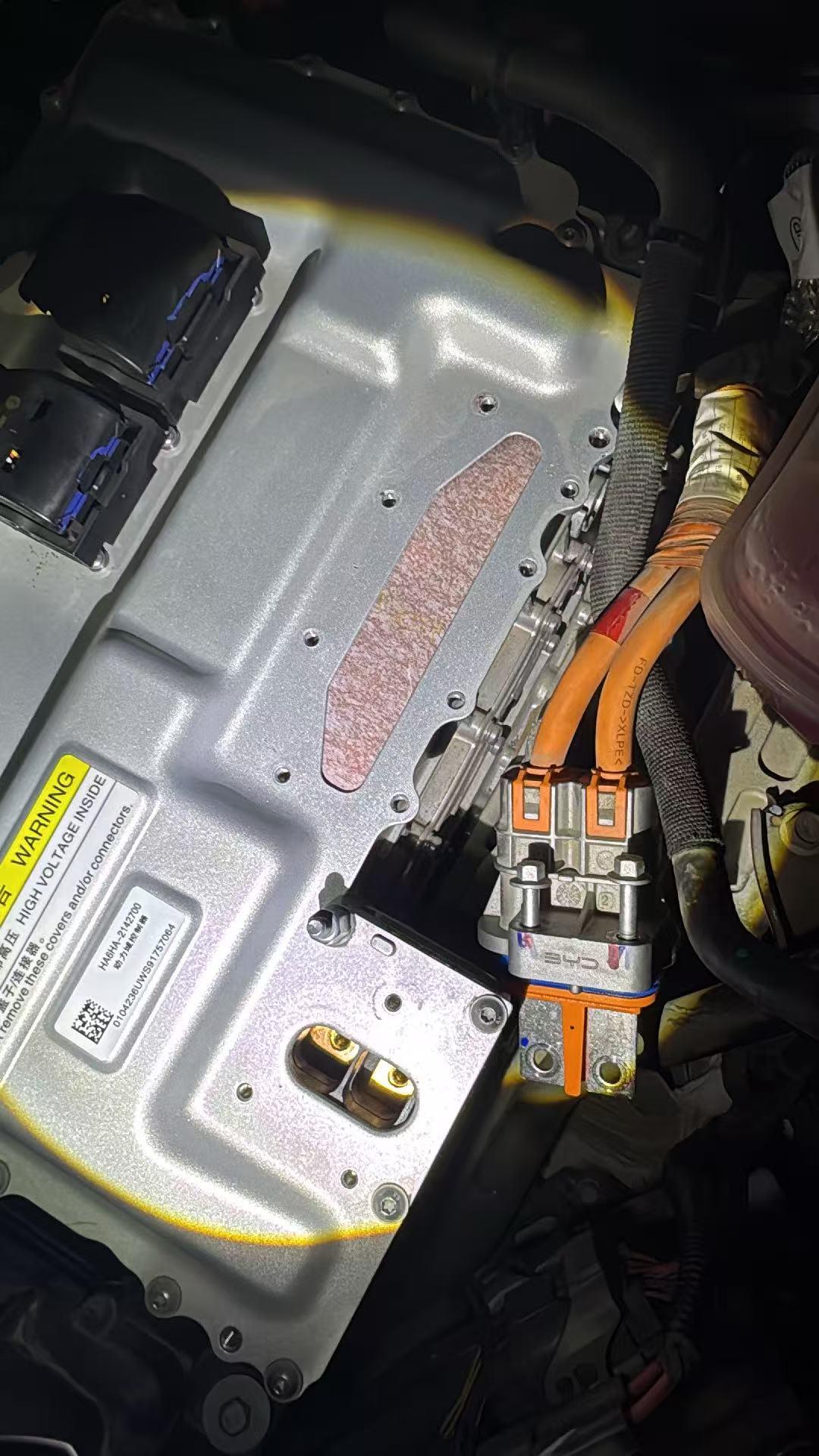
The Power Domain Controller in the BYD Seal 05 engine bay. Note the high-voltage warning label.
The PDC is a sealed integrated module. It cannot be repaired at the component level — the manufacturer does not support internal repair procedures. The only supported solution is replacement with a new OEM unit.
💡 Replacement & Cost Summary
| Part | Power Domain Controller (OEM) |
| Price (EXW China) | Approximately USD 1,650 |
| Post-Installation | Remote anti-theft matching required |
| Repairable? | No — sealed module, replace only |
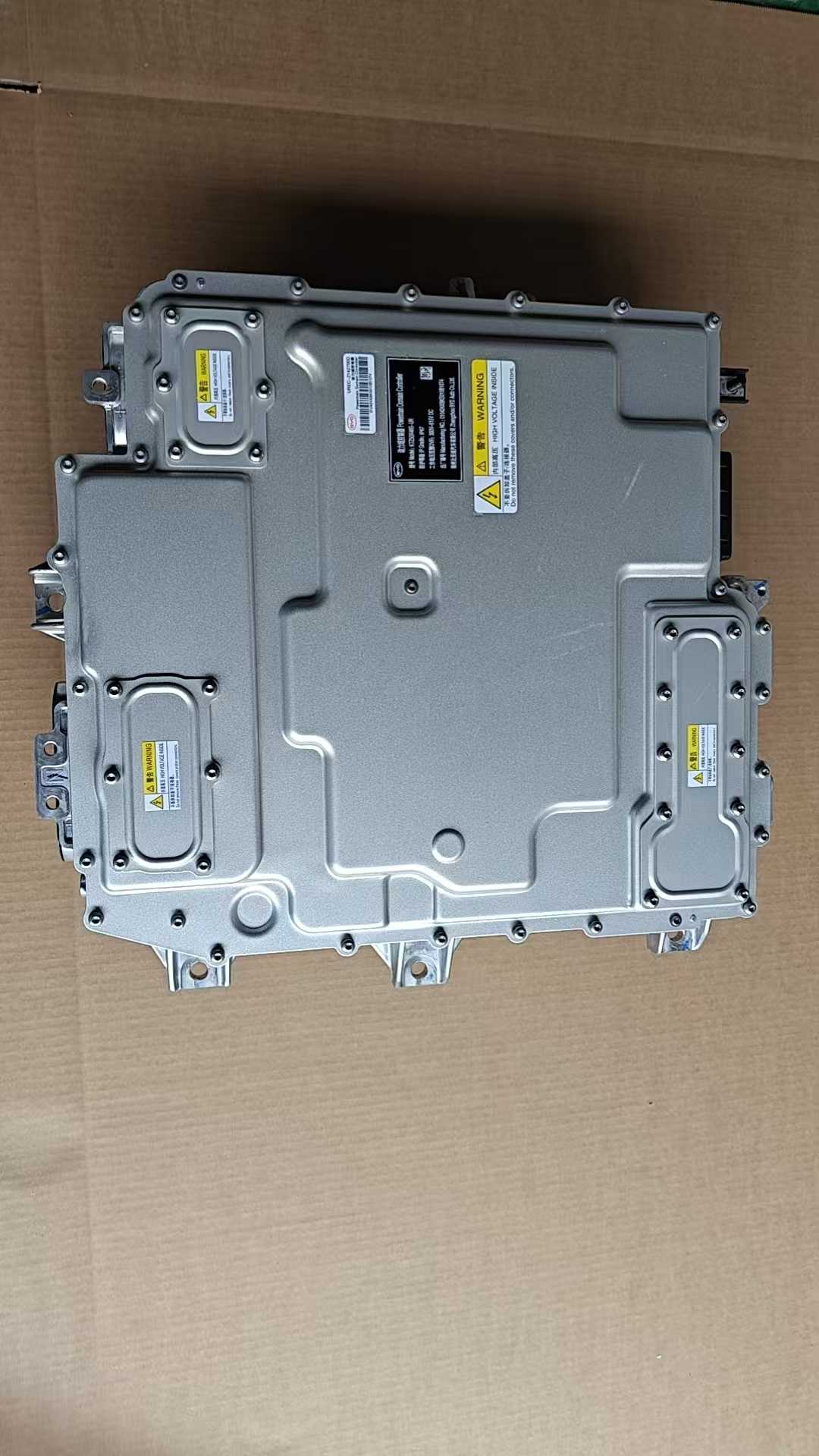
The replacement Power Domain Controller. 5th-gen DM-i platform identifier visible on the label. Supplier quote: approximately USD 1,650 EXW Guangzhou.
🔗 A Similar Symptom Observed on Another Chinese EV
Interestingly, NEV Fix later encountered a nearly identical symptom on a Dongfeng M-Hero 917 (M Hero 01) from the United Kingdom — the same false "disconnect charging cable" warning with no cable connected, the same zero-DTC result on static scan.
While that case is still under investigation, it suggests that similar charging-related false alarms may appear across different Chinese EV platforms that share power domain architecture principles. These cases remain rare, and without complete diagnostic data from the second case, no platform-level conclusion can be drawn. Each case should be diagnosed individually through charging-state data analysis — exactly as we did here.
For a deeper understanding of how Chinese EV electrical architectures handle these kinds of faults, our Li Auto L9 FSD module failure case study and Zeekr region lock diagnostic case cover related domain controller and software-level diagnostic methodologies.
📌 Key Takeaways for Workshops
- Charging-related faults may be invisible in static mode. If a customer reports a charging warning or EV drive-interlock issue and the static scan is clean, the next step is always a charging-state scan.
- Generic scanners cannot replace OEM-level diagnostic access. The SmartLink C-mode provided the data granularity needed to see what the local scanner missed entirely.
- Power Domain Controller failures produce distinctive patterns: AC input detected → no charge initiation → false "charging" status → drive mode blocked. If you see this combination, suspect the PDC.
- Always check the fuse before condemning the controller. A blown fuse costs nothing to replace. A controller costs USD 1,650.
- Remote diagnostics can save shipping costs and downtime. Instead of shipping the vehicle or the suspected part to a specialist, this entire diagnosis was completed over a SmartLink connection from 7,000 km away.
🛠️ Stuck on a Chinese EV diagnostic problem?
NEV Fix provides remote diagnostic support for workshops in 40+ countries. If your local scanner can't find the fault — we probably can.
Need OEM Power Domain Controller or other BYD parts? Send your VIN for a quote. We ship from Guangzhou to Iraq, Middle East, CIS, and worldwide.
🔗 Related Case Studies & Knowledge
❓ Frequently Asked Questions
Why did local scanners show no fault codes on this BYD Seal 05?
Many charging-related faults on BYD vehicles are only detectable when the vehicle is in charging mode. The Power Domain Controller communicates charging status only when a charging cable is connected and the system attempts to initiate a charge cycle. In static mode (vehicle powered on but not charging), the controller does not report charging-related DTCs. This is why both the local workshop's generic scanner and NEV Fix's initial static remote scan found zero fault codes — the fault only became visible when we instructed the customer to connect a 220V charging cable and scanned again during the charging attempt.
Can a failed Power Domain Controller be repaired, or must it be replaced?
The Power Domain Controller on the BYD Seal 05 / Destroyer 05 (5th-gen DM-i platform) is a sealed integrated module that is not designed for component-level repair. The manufacturer does not support internal repair procedures. Replacement with a new OEM unit is the only supported solution. After replacement, a remote anti-theft matching procedure is required to pair the new controller with the vehicle's VIN and security system. The OEM replacement part is priced at approximately USD 1,650 from Chinese suppliers.
Can similar charging warnings happen on other Chinese EV models?
This specific Power Domain Controller failure is uncommon on the BYD Seal 05. However, NEV Fix has observed a similar false "disconnect charging cable" warning on a Dongfeng M-Hero 917 (M Hero 01) from the United Kingdom, suggesting that similar charging-related false alarms may appear across different Chinese EV platforms that share power domain architecture principles. These cases remain rare, and without complete diagnostic data from the second case, no platform-level defect can be confirmed. Each case should be diagnosed individually through charging-state data analysis.